
When tree branches start creeping toward power lines, it’s easy to assume a quick trim will solve the problem. Unfortunately, that assumption is where things get dangerous. Trees near power lines pose a serious electrocution risk, and every year homeowners are seriously injured or killed attempting DIY trimming that should never have been done without proper training and equipment.
Key Takeaways
- Trees within 10 feet of any electrical line require professional assessment and care – never attempt DIY pruning.
- Virginia’s Overhead High Voltage Line Safety Act mandates specific clearance requirements with legal penalties for violations.
- Both living and dead trees conduct electricity when wet, as rain, snow, or morning dew transforms any tree into a potential conductor, making weather conditions a critical safety factor.
- Dominion Energy reports tree-related outages account for 21% of all power interruptions in Northern Virginia.
- Dominion Energy handles primary utility lines, while homeowners are responsible for service lines; knowing who handles which electrical infrastructure determines whether you call the utility company or hire a Certified Arborist.
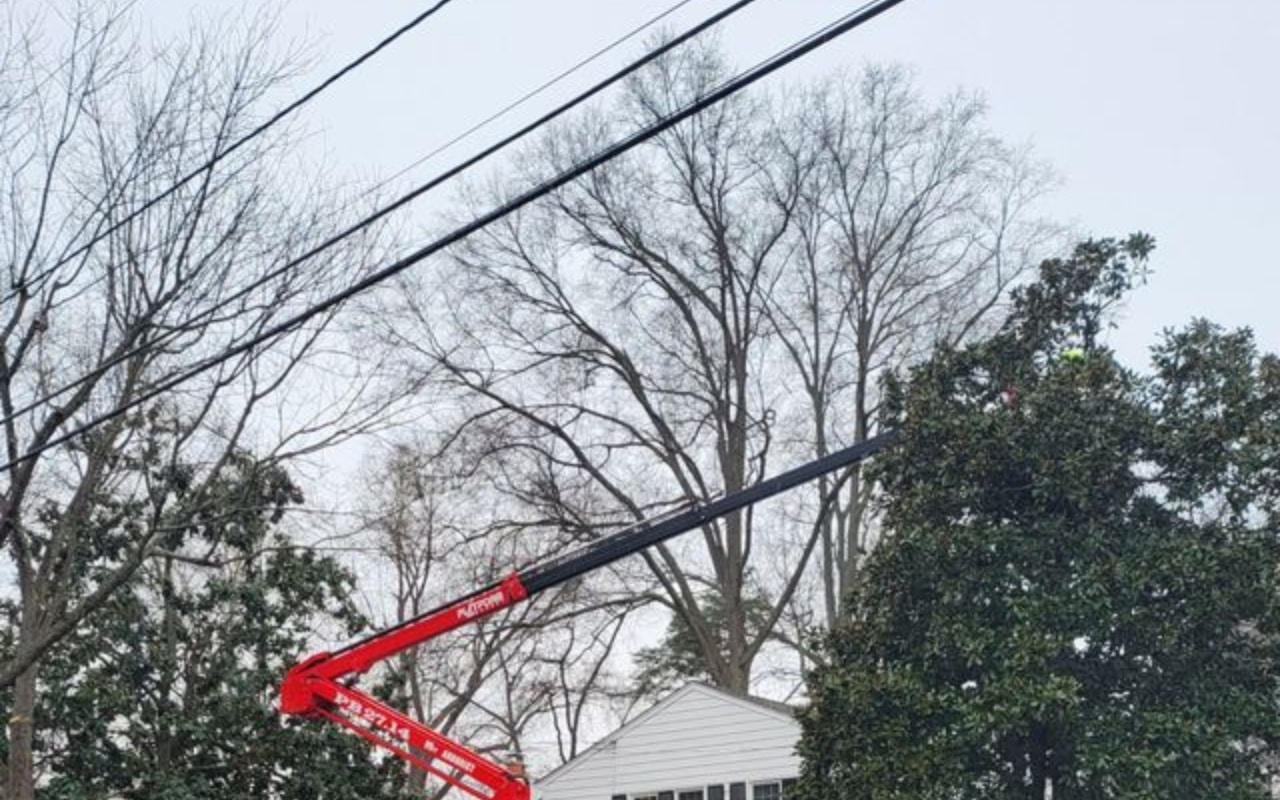
Green Vista’s specialized equipment allows our certified crews to safely work near power lines while maintaining proper clearance distances.
Why Are Trees Near Power Lines Dangerous?
Trees near power lines are dangerous because electricity can travel through branches, trunks, and even the ground, turning the tree itself into a conductor. That risk exists even when branches aren’t physically touching the wires. Contact, arcing, wind movement, moisture, and improper pruning can all result in electrocution, fires, or widespread power outages.
In fact, tree-related contact causes roughly 21% of all power outages, according to Dominion Energy. Storms, wind, and ice only increase the likelihood of branches interfering with energized lines.
Trees Can Conduct Electricity – Even Without Direct Contact
Trees growing too close to power lines can cause serious hazards long before a branch makes contact. Electricity can arc from a live wire to a nearby branch, especially in wet or windy conditions. That arcing can ignite fires, damage the electrical system, or energize the tree itself.
If you’re nearby when this happens, electricity can jump from the tree to you, leading to severe injury or death.
WARNING: If you aren’t sure if your tree is too close to power lines, have a professional arborist conduct a tree risk assessment.
Electrified Trees Can Shock Anyone Nearby
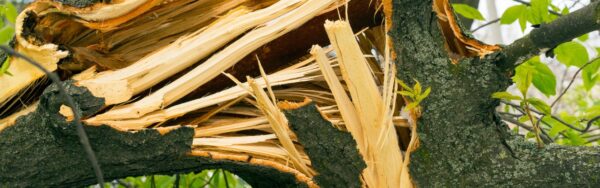
When a tree becomes electrified, electricity moves through the moisture inside the tree and down into the ground. This is similar to what happens during a lightning strike. The sudden heat can cause bark to split, wood to burst, and branches to break without warning.
Living trees conduct electricity more easily because they contain more moisture. Dead trees are less conductive, but they can still be dangerous, especially when they’re wet from rain, snow, or ice. Anyone touching the tree – or even standing close to it – can become part of that electrical path. That’s how serious injuries and electrocution happen.
Because of this danger, a reputable company with insurance and qualifications will always coordinate with power companies to turn off electricity before working with the tree.
Branches That Aren’t Touching Are Still a Serious Risk
We don’t recommend working on any trees within 10 feet of an electrical line. It’s always best to call in a professional tree service company to prune or trim trees near wires.
These branches can sway in the wind, shift under snow load, or snap unexpectedly, bringing them close enough for electricity to arc.
What Virginia Law Says About Trees Near Power Lines
Virginia’s Overhead High Voltage Line Safety Act (§§ 59.1-406 through 59.1-414) establishes clear legal requirements. For overhead lines carrying 600 volts or more, Virginia law mandates a 10-foot minimum clearance zone.
However, Dominion Energy recommends against planting any trees within 15 feet of electrical utility wires. Violating these clearance requirements is dangerous and can result in legal penalties and liability for power outages or property damage caused by your trees.
Who Is Responsible for Trimming Trees Near Power Lines?
Responsibility for trees near power lines depends on where the tree is located and whether it’s interfering with the electrical system.
If a tree or branch is touching a power line, stuck on a wire, or has vines growing into the lines, the utility company should be contacted first. In Northern Virginia, Dominion Energy evaluates these situations to determine whether pruning or removal is necessary to protect the power grid and public safety.
For trees that are near power lines but not actively interfering, homeowners are typically responsible for maintenance. However, this work still requires professional expertise, coordination with the utility company, and strict safety protocols to prevent electrocution or outages.
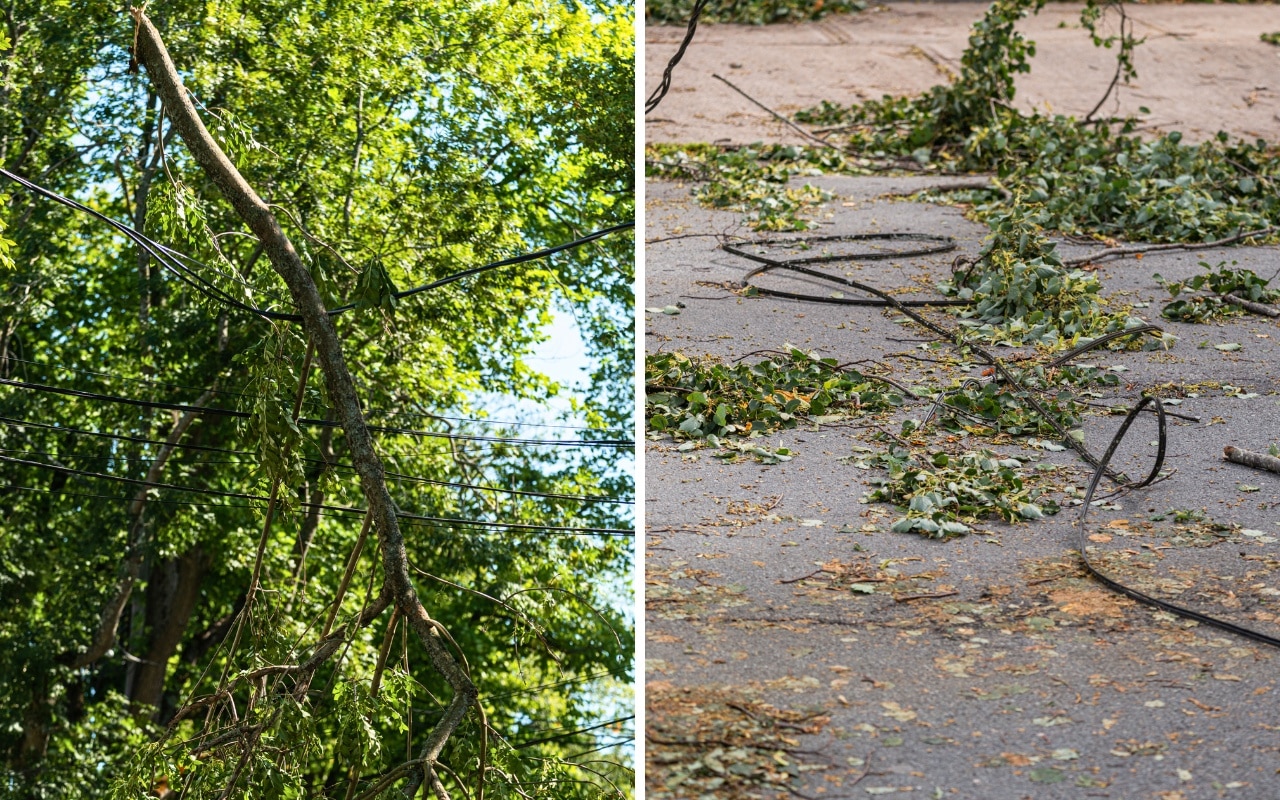
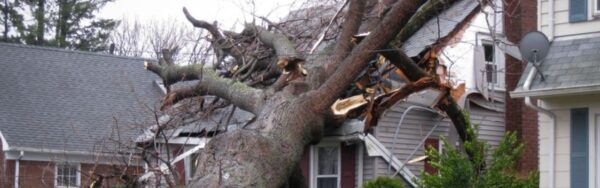
The contrast between preventive care and storm aftermath shows why proactive tree management near power lines is essential for Northern Virginia homeowners.
Is it Safe to Prune Trees Near Power Lines Yourself?
No, pruning trees near power lines is never a safe DIY project – whether those lines run along the street or connect directly to your home.
Homeowners often underestimate how dangerous tree work becomes when electrical wires are involved. Long-handled pruners, metal ladders, and wet branches dramatically increase the risk of electrocution. Many serious injuries and fatalities occur when someone accidentally contacts an energized wire they didn’t see or thought was “far enough away.”
This danger isn’t limited to high-voltage lines on utility poles. The service line running from the pole to your home carries significantly more power than a household outlet and can deliver a fatal shock. Unlike changing a light switch indoors, tree work often places you on a ladder or in the tree itself, making it far harder to break contact if electricity flows through your body.
Because of these risks, any pruning near power lines in Northern Virginia should always be handled by trained professionals who understand electrical clearance requirements and coordinate with the utility company when needed.
How Do Professional Arborists Handle Trees Near Power Lines?
Working on trees near power lines requires strict safety procedures and coordination with the utility company. Before any pruning begins, professional arborists determine whether the line is energized and whether the utility needs to be involved.
When required, the tree service coordinates with Dominion Energy to de-energize or manage the line so work can be performed safely. Only after the electrical hazard is addressed do arborists begin pruning or removing branches that interfere with the lines.
Because of the added risk, specialized training, and coordination involved, pruning or removing trees near power lines typically costs more than standard tree trimming. This isn’t an upsell—it reflects the additional safety measures required to prevent electrocution, outages, and property damage.
Frequently Asked Questions Trees Near Power Lines
Are dead trees near power lines still dangerous?
Dead trees generally don’t conduct electricity unless they’re wet from rain, snow, or morning dew. However, they pose other significant risks near power lines, as they’re more likely to break unexpectedly and fall onto electrical infrastructure, potentially causing outages or fires. Dead trees near power lines should be removed promptly by professionals.
Do I need a permit to remove trees near power lines in Northern Virginia?
While Virginia doesn’t require permits specifically for tree removal near power lines, many Northern Virginia jurisdictions have tree preservation ordinances that may require permits for removing certain trees. Additionally, you must coordinate with Dominion Energy before any work within the minimum approach distance. Check with your local municipality about specific requirements in Arlington, Fairfax County, or Alexandria.
Can electricity jump from power lines to nearby trees?
Yes, electricity can arc from power lines to trees even when they’re not touching, especially during voltage surges from lightning strikes or equipment malfunctions. This arcing can occur across several feet of air gap and can cause fires or electrocute anyone in or near the tree. This is why Virginia law requires a 10-foot minimum clearance.
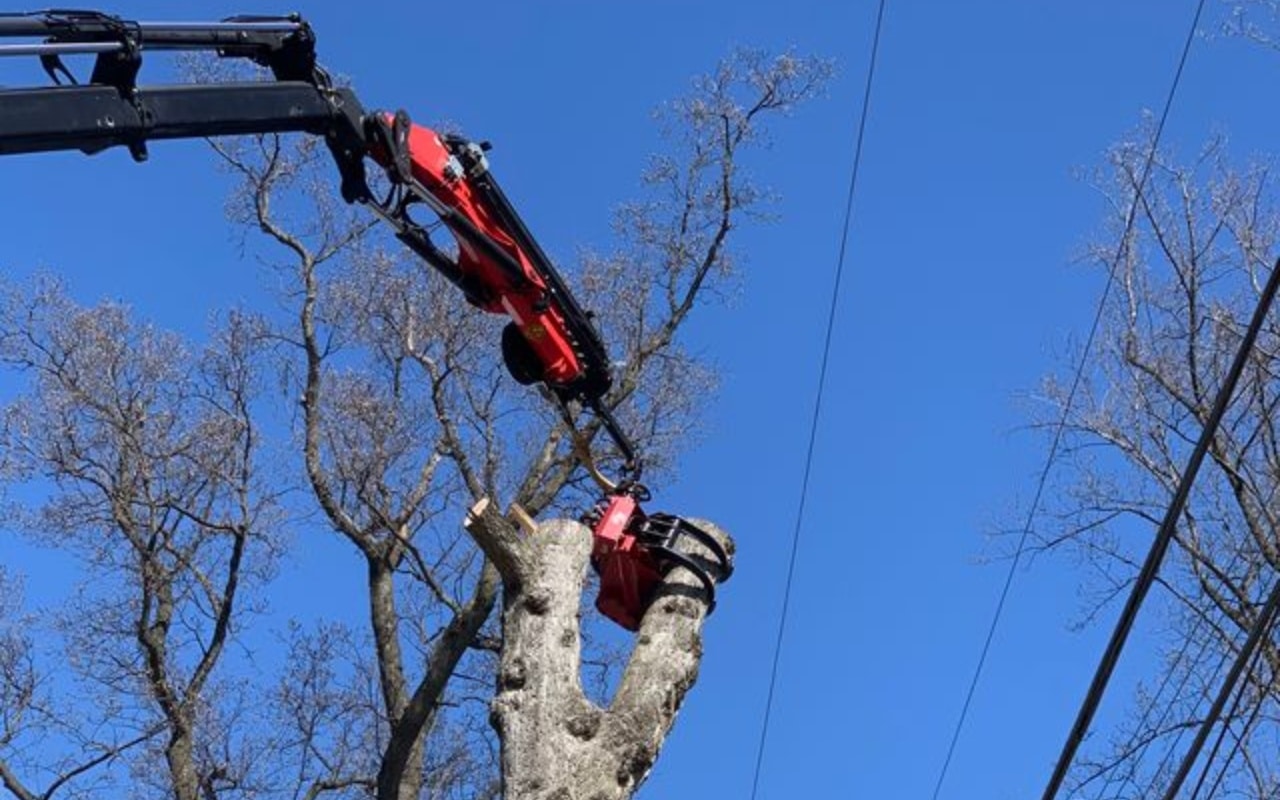
Green Vista’s remote-controlled grapple saw crane enables precise tree removal near electrical infrastructure without compromising safety.
Protect Your Family and Property – Get Professional Help for Trees Near Power Lines
Many homeowners don’t realize that even trees that aren’t currently touching power lines can become dangerous during pruning. Branches shift unexpectedly, tools can contact lines, and the physics of falling limbs are unpredictable. When you factor in Virginia’s legal requirements and the specialized training needed for electrical safety, the risks of DIY tree work near power lines far outweigh any potential savings.
Your best option is always to hire a reputable tree service with the experience, expertise, and equipment to safely work around electrical hazards. Green Vista’s crews have the specialized training and insurance coverage to protect both your property and your family. Don’t gamble with electricity – contact us at 703-249-6219 or request a quote online for a professional assessment that prioritizes safety above all else.


Get helpful tips, local news, inspiring stories, and more delivered right to your inbox every month. Don't miss another issue - join today!