In Springfield, it’s not uncommon for fast-moving storms to roll through with heavy rain and strong winds — especially in the spring and summer. When they do, trees take the hit.
Sometimes that means a few downed branches. Other times, it’s a full tree coming down on your property. And when that happens, the first question is usually the same: does your homeowners insurance cover tree removal — and how much is this going to cost?
Key Takeaways
- Typically, homeowners insurance only covers tree removal when the tree falls because of a covered peril (such as wind, lightning, and hail) and damages a covered structure.
- Most Virginia policies cap coverage for tree removal at $500–$1,000 per tree, so out-of-pocket expenses may still be significant.
- Immediate documentation — with photos, videos, and an assessment from a professional arborist — is vitally important when it comes to strengthening your claim.
- Working with a tree service experienced in insurance claims helps ensure everything is documented correctly from start to finish.

Before filing a homeowners insurance claim for tree removal, run the numbers — the combination of your deductible and potential premium increases can sometimes outweigh the payout.
Does Homeowners Insurance Cover Tree Removal?
In certain situations, your homeowners insurance will pay for tree removal. But the conditions are stricter than most Springfield homeowners realize.
When Does Insurance Cover Tree Removal?
For your insurance to cover tree removal, two things usually need to be true: the tree came down because of a covered peril, and it damaged a covered structure. Generally, covered perils include:
- Thunderstorms and wind
- Hail
- Lightning strikes
- Weight of snow or ice
If a storm toppled an oak onto your garage, that is a covered loss. Your policy also usually covers removal when a fallen tree blocks your driveway or an ADA-accessible entrance — even if there is no structural damage.
How Much Does Insurance Cover for Tree Removal?
Virginia law requires insurance providers to cover at least 5% of your dwelling limit for tree and shrub damage. For a home insured for $400,000, that’s around $20,000 for the damage. This sounds generous, but those are aggregate caps across all trees and landscaping per incident, not per tree.
Removal payouts for individual trees are often far less. After your deductible — commonly $500 to $1,000 in Virginia — the funds may not go as far as you’d hope.
In Springfield, it’s a common scenario: a storm takes down a couple of large trees. One lands on your shed, a covered loss, while the other falls across your backyard without hitting anything. Likely, the first tree is covered while the second is entirely on you.
If you’re in a similar situation, we recommend discussing your coverage with your insurance provider.
When You’re on Your Own with Tree Removal
Insurance won’t cover everything. Typically, these situations leave you no option but to pay everything in full yourself:
- A tree falls in your yard but doesn’t cause any structural damage — this is the most frequent instance
- You want to remove a dead, diseased, or leaning tree before it falls, which is considered maintenance
- Your insurance provider determines you failed to act on a known hazard, such as a dead tree clearly declining and nothing was done about it
- Damages from earthquakes or floods, which require a separate policy
When an insurer examines a claim, they are looking for signs that the tree was healthy prior to the storm bringing it down. Visible deadwood, fungal growth at the base, declining bark, or a noticeable lean can all indicate pre-existing decline. If the adjuster determines the tree was already on a downward slope and you did not act on it, the claim can be denied — even if the storm did technically cause the fall.
PRO TIP: If a tree on your property is visibly declining or dead, do not wait for a storm. If your insurer determines you neglected a known hazard, it won’t cover the removal. Adjusters look for signs of pre-existing decay, which is why you should learn about the signs that a tree is dead or dying.
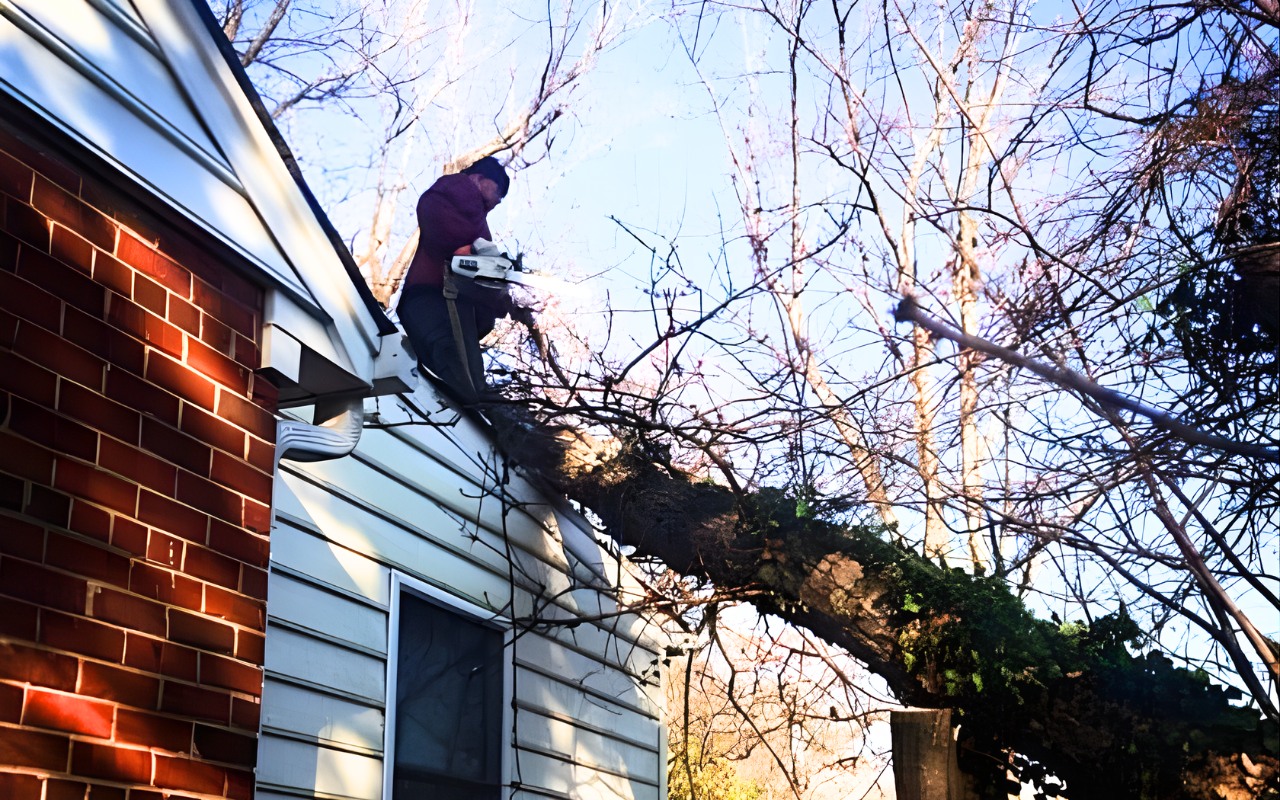
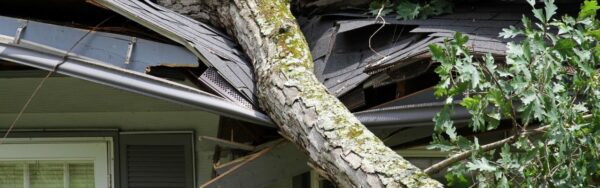
When a tree falls on your home, thorough photo and video documentation before any cleanup begins is one of the most important steps you can take to support your insurance claim.
How Tree Removal Works When Insurance Is Involved
If your claim is approved, the process doesn’t change dramatically — but there are a few key differences in how the work is handled.
Tree removal tied to an insurance claim typically involves more detailed documentation and coordination than a standard job. That includes:
- Clear Scope of Work Upfront: The removal needs to be defined in a way your insurance company can understand — what’s being removed, why it’s necessary, and what made the situation complex (structure impact, access, tension, etc.).
- Job Documentation that Supports the Claim: Beyond basic photos, insurers often expect a clear record of the work performed. This can include before-and-after images, notes on how the tree failed, and a breakdown of the removal process.
- Work that Aligns with Covered Damage: The focus is typically on the tree that caused damage or created access issues — not general cleanup or unrelated tree work.
- Coordination with Other Repairs if Needed: If the tree impacted a structure, removal is often just the first step. The work may need to be timed or staged alongside roofers, contractors, or other trades.
For homeowners, the biggest difference is that the job needs to be documented and communicated more clearly from start to finish.
Working with a tree service that’s familiar with insurance-related work helps ensure nothing gets missed — and that the process moves forward without unnecessary delays.
What Should You Do After a Tree Falls on Your Property?
The steps you take in the aftermath of a tree falling can make or break your insurance claim. If a tree falls on your property, you should:
- Stay safe. Ensure no one is near the tree, especially if it’s near or took down power lines.
- Document everything prior to cleanup. Take photos and videos from numerous angles of the tree, damage, and surrounding areas. Record the date, time, and weather conditions as well. Close-ups of the point of failure on the trunk or root plate can help an arborist determine why the tree failed. Thorough documentation can lead to a stronger claim.
- If the tree shows an immediate danger, act and document quickly. If the tree is threatening your house or blocking emergency access, you don’t have to wait for an adjuster before removing it. Just make sure you have visual evidence of everything before work begins.
- Reach out to your insurance company to report the loss. Virginia requires insurance providers to acknowledge claims within 15 calendar days.
- Get an assessment from a professional arborist. This step is more important than most people realize. An ISA Certified Arborist can identify the tree’s species, determine the failure’s cause, examine structural damage, and provide a written report with a thoughtful estimate. Adjusters tend to rely on professional documentation to process claims.
- Keep every receipt. This applies to emergency removal, temporary repairs, tarps, and anything else that is related to the damage.
If a tree is on your home, stuck in power lines, or suspended in another tree, don’t try to handle it yourself. These are dangerous situations that call for professional tree removal.
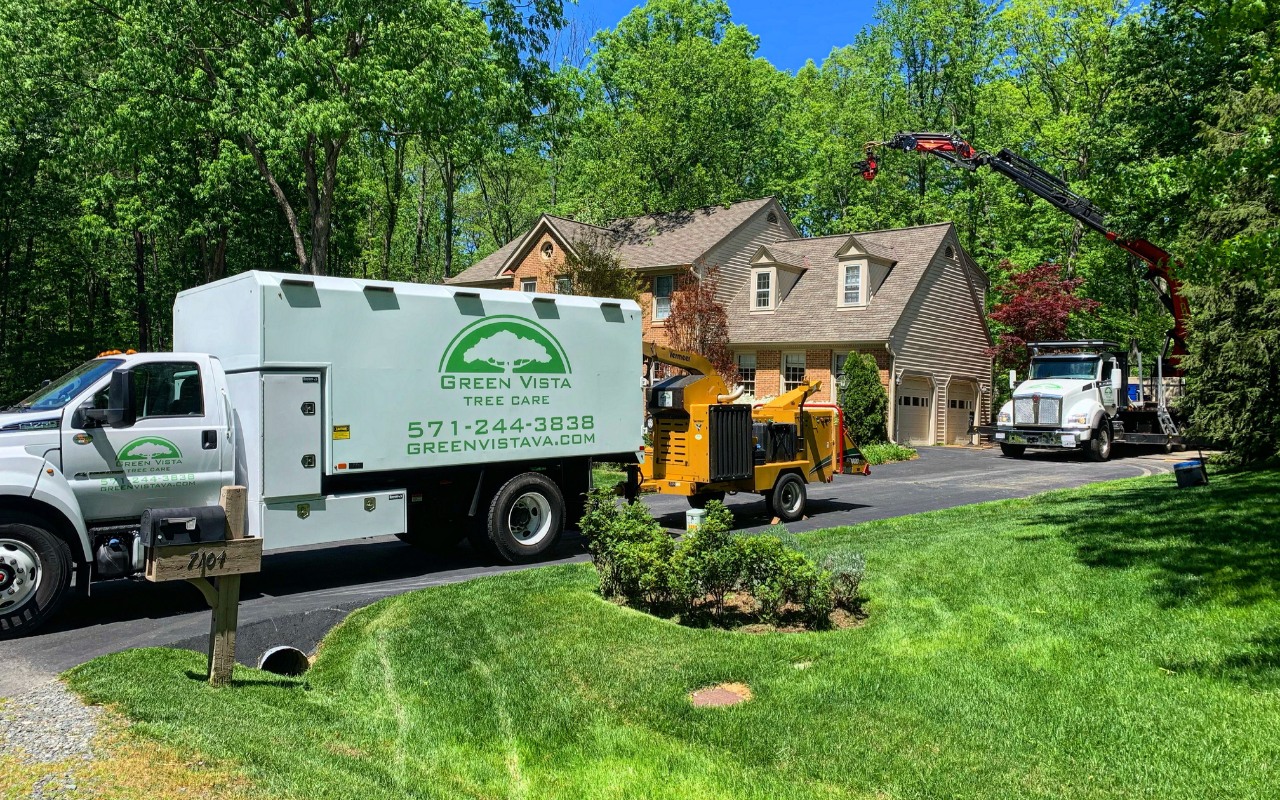
Green Vista Tree Care’s specialized equipment and ISA Certified Arborists support Springfield homeowners through every step of storm damage recovery and insurance documentation.
Frequently Asked Questions About Tree Removal and Homeowners Insurance
Does homeowners insurance cover preventive tree removal?
No. Standard homeowners insurance policies only cover removal when a tree has already come down because of a covered peril and damaged a covered structure. Removing a tree because it appears to be hazardous is viewed as routine maintenance and is the homeowner’s responsibility.
What if a tree falls in my yard but doesn’t damage anything?
If a tree falls in your yard but doesn’t damage anything, your insurance generally won’t cover its removal. The only real exception is if the fallen tree blocks your driveway or a handicap-accessible entrance. Otherwise, you’ll have to pay for the removal yourself.
Does insurance cover tree removal after a storm?
Insurance will only cover tree removal after a storm if the storm-toppled tree causes damage to a covered structure, such as your home, garage, shed, or fence. If a tree falls during a storm but doesn’t hit anything, it is generally not covered.
What happens when a neighbor’s tree falls on my property?
If your neighbor’s healthy tree falls onto your property during a storm, your insurance covers the damage, not theirs. Virginia law views storms as an “act of God,” so your neighbor isn’t liable for something out of their control. They become responsible if you can prove negligence, such as notifying them in writing about the hazards of their tree and failing to act.
Will my insurance go up if I file a tree removal claim?
It can. Filing a claim can increase your premium for three to five years. If your removal expenses are around your deductible and the damage is not severe, paying out of pocket is typically the smarter financial move.
Schedule a Tree Inspection with Green Vista Tree Care to Protect Your Property
Skip the stress of insurance claims and get ahead of the problem with a professional tree inspection — so your property is ready for whatever this season brings.
Green Vista Tree Care’s team of ISA Certified Arborists provide professional assessments and thorough documentation to support insurance claims throughout Springfield and Northern Virginia. Call 703-249-6219 or request a complimentary estimate online to have the trees on your property evaluated.



Get helpful tips, local news, inspiring stories, and more delivered right to your inbox every month. Don't miss another issue - join today!