This past June, destructive thunderstorms left more than 11,000 Arlington residents without power as mature trees crashed down on power lines and homes throughout Northern Virginia. While these summer storms grab headlines, fall is actually the best times for homeowners to identify the tree hazards that will threaten their property during winter’s ice and wind storms.
The warning signs are there if you know what to look for. Here are six critical tree hazards that Northern Virginia homeowners can identify this fall, potentially saving thousands in property damage and keeping their families safe through winter storm season.
Key Takeaways
- Fall leaf drop reveals hidden hazards that summer foliage concealed, making autumn the ideal time for tree risk assessment in Northern Virginia.
- Oak decline affects thousands of trees across Fairfax County and Arlington, creating urgent removal needs before winter storms.
- Northern Virginia property owners can be liable for tree damage to neighboring properties under the state’s 2007 tree liability law.
- Professional assessment becomes critical when homeowners spot any of these six warning signs, as trained arborists can determine removal urgency and safety requirements.
Why Fall is Critical for Tree Risk Assessment in Northern Virginia
Northern Virginia’s climate creates the perfect storm for tree failures. Our region experiences dramatic weather swings from summer heat stress to winter ice storms, all while supporting some of the oldest and most valuable tree canopies in the Mid-Atlantic. Fairfax County alone has an estimated 44 million trees – many of which are reaching maturity or showing signs of decline.
And the timing couldn’t be more critical. As the National Weather Service Baltimore/Washington Forecast Office has documented, our region has been seeing an increase in severe weather events, such as winter storms that bring dangerous ice loads that can snap weakened branches and topple compromised trees.
What makes fall assessment so valuable is visibility. Summer’s thick canopy hides structural problems, dead branches, and disease symptoms that become obvious once leaves drop. For homeowners in high-value neighborhoods, like McLean (where median home values exceed $1.3 million) or Old Town Alexandria’s historic district, identifying these issues early can prevent catastrophic property damage.
“We’ve seen a dramatic increase in emergency calls after winter storms because homeowners missed the warning signs that were visible all autumn long. A simple October assessment can save families thousands in emergency removal costs and prevent the heartbreak of property damage.” – Nicolas Medina, Certified Arborist at Green Vista Tree Care
The 6 Fall Tree Warning Signs Northern Virginia Homeowners Can’t Ignore
While trees don’t have warning bells that something is wrong, there are some typical signs to look for that indicate something is wrong.
1. Dead or Dying Trees
Oak decline has become the most urgent tree safety issue facing Northern Virginia homeowners. Falls Church and the surrounding areas have documented extensive oak deaths from a combination of drought stress, fungal pathogens, and insect damage that weakens trees over multiple seasons.
Signs of oak decline include:
- Browning leaves that don’t fall normally in autumn
- Bare branches in the upper canopy
- Mushrooms growing at the tree base
Dead oaks become extremely brittle and unpredictable. Unlike other tree species that may linger for years after dying, oaks can fail suddenly, making immediate removal critical once decline is identified.
PRO TIP: The Virginia Department of Forestry recommends professional assessment of any oak showing decline symptoms, as the structural integrity can deteriorate rapidly.
However, oaks aren’t the only targets of pests and diseases in Northern Virginia. Other signs to look for that indicate a problem with your trees include:
- Increased insect activity around the tree
- Mushrooms and other fungi growing on the trunks or branches
- Visible sawdust around the tree’s base or carpenter ants
- Cankers developing on branches or the main trunk
PRO TIP: Dead or dying trees are often more expensive to remove than healthy trees due to their instability. Always trust these trees to a professional tree removal company.
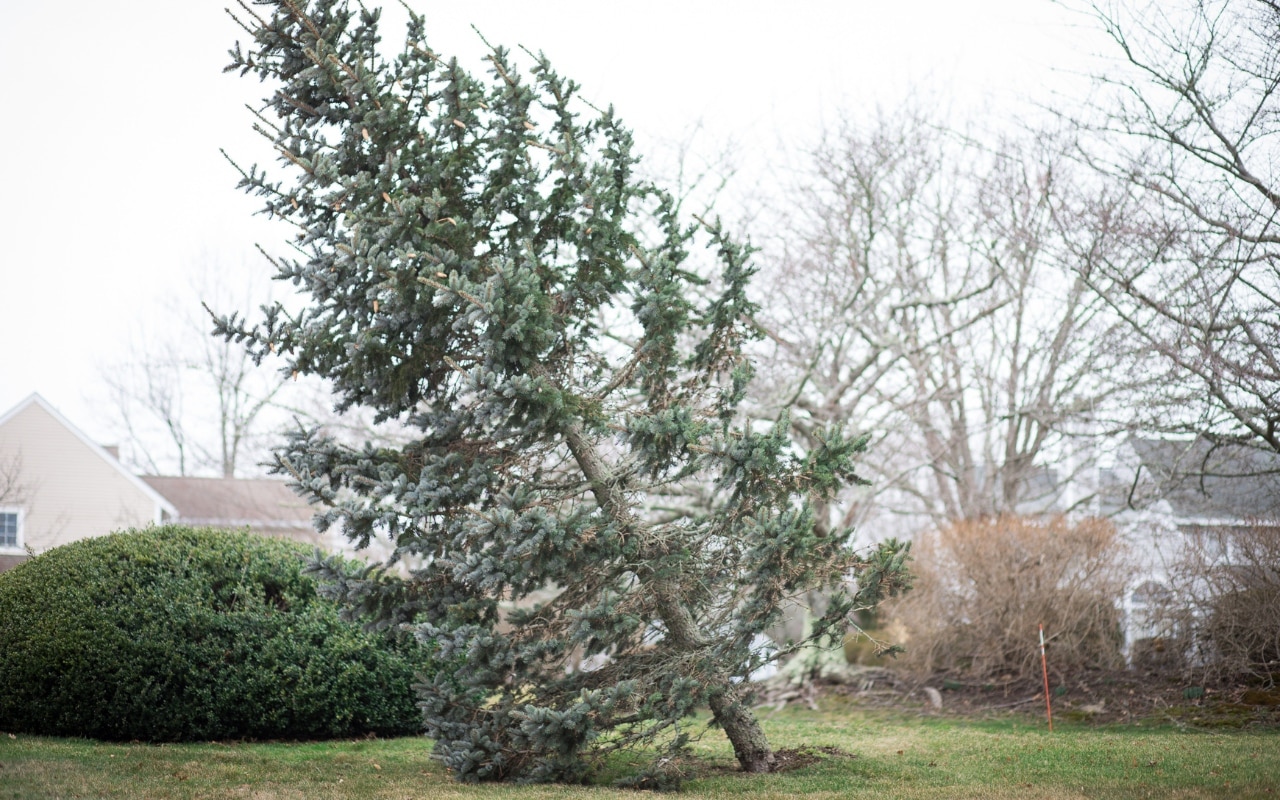
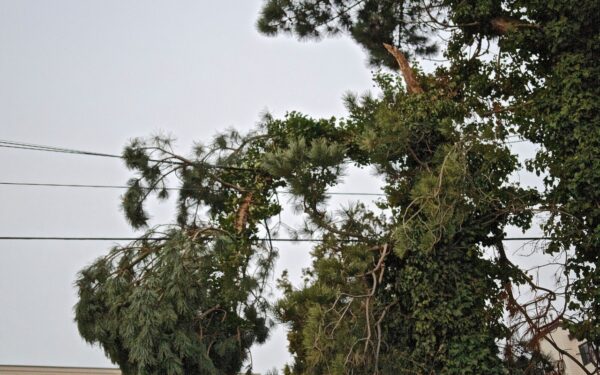
Trees that develop sudden leans, like this evergreen, often indicate root system failure and require immediate professional assessment.
2. Trees with Noticeable Leans
A tree that suddenly develops a lean or increases an existing lean is showing signs of root system failure. This is particularly dangerous in Great Falls’ heavily wooded properties, where mature trees on slopes can uproot during saturated soil conditions from fall and winter precipitation.
Not all leaning trees are hazardous. Many have grown at angles their entire lives and developed compensating root systems. The concern arises when a tree that was previously straight begins leaning, or when an existing lean increases noticeably. Some signs to look for include:
- Exposed roots on the leaning side
- Soil heaving around the base
- Cracks in the ground near the tree
Root damage from construction activity is a common cause of delayed tree failure in Northern Virginia’s developing neighborhoods. If recent excavation, utility work, or construction occurred within 50 feet of a tree, monitor for lean development over the following seasons.
3. Exposed or Damaged Root Systems
Root problems are often invisible until fall cleanup reveals the evidence. In Arlington’s Forest Hills and Maywood neighborhoods, where post-WWII development created tight spaces between aging trees and modern infrastructure, root damage is increasingly common.
Watch for roots that have been cut or damaged by recent construction, utility work, or even aggressive landscaping. A tree can lose up to 25% of its root system and survive, but beyond that threshold, stability becomes compromised. Signs include wilting despite adequate moisture, premature fall color, or visible root decay.
Girdling roots – roots that wrap around the base of the tree – create a slow strangulation effect that may not become apparent until the tree is significantly weakened. These often develop in trees that were planted too deeply or in compacted soils common in urban areas.
The Virginia Cooperative Extension notes that root problems can take years to manifest in the canopy. This means a tree may look healthy while its foundation is failing. If you can see damaged roots, mushrooms growing from root areas, or notice the tree’s root flare isn’t visible at ground level, a professional assessment is warranted.

Cracks like this become much more visible once leaves drop, indicating potential structural failure that requires professional evaluation.
4. Visible Cracks in Trunk or Major Branches
Structural cracks become much more visible once leaves drop, and they’re particularly concerning in Old Town Alexandria’s historic district where century-old trees stand close to irreplaceable brick structures and narrow streets limit emergency access. Some signs to look for include:
- Vertical cracks in the main trunk
- Splits where major branches join the trunk
- Cracks that extend deep into the wood
These can result from lightning strikes, frost damage, wind stress, or simply the aging process in large, mature trees. Some cracks are superficial, affecting only the outer bark, while others penetrate deep into the wood structure.
5. Dead Branches and Widow Makers
Dead wood becomes brittle and unpredictable. A branch that hung safely all summer can fall without warning from wind, ice load, or even the vibration from a passing truck. These branches pose immediate risks to people and property below. We recommend removing them as soon as you see them.
Look for branches that lack bark, show no signs of new growth, or remain leafless when the rest of the tree has foliage. Woodpecker activity often indicates dead wood, as the birds are attracted to insects living in dying branches. However, don’t assume that branches with some bark remaining are safe. Internal decay can advance while outer bark remains intact.
The size of the dead branch determines the urgency. Small branches may only damage property, but large dead branches can cause serious injury or significant structural damage when they fall. In densely populated areas, like Falls Church, even moderate-sized falling branches can hit multiple properties or block important access routes.
6. Trees Too Close to Power Lines or Structures
Power line clearance becomes critical as trees reach maturity. This is especially true in Arlington’s densely developed neighborhoods. Overhead utilities run close to street trees and mature residential plantings that have outgrown their intended space.
In fact, Dominion Energy requires specific clearances around power lines. Homeowners are typically responsible for maintaining trees on their property that threaten utility infrastructure. Trees growing into power lines create fire risks, power outage potential, and serious electrocution hazards during storm events.
Trees threatening structures pose similar concerns. Branches overhanging roofs can damage shingles, clog gutters, and provide access routes for pests. More seriously, large branches or entire trees that could reach structures if they fail represent significant property damage risks that insurance companies increasingly scrutinize.
Frequently Asked Questions
Can I be held liable if my tree damages a neighbor’s property?
Yes, you can be held liable if your tree damages a neighbor’s property. Virginia’s 2007 Supreme Court ruling established that property owners can be held responsible for tree damage when they knew or should have known about hazardous conditions. Having professional assessments and following expert recommendations provides important liability protection.
How quickly can Green Vista respond to emergency tree situations?
Green Vista provides 24/7 emergency response throughout Northern Virginia. For immediate safety threats, such as trees on homes, blocking roads, or involving power lines, we respond as soon as possible.
Do I need permits for tree removal in Arlington, Alexandria, or Fairfax County?
Whether or not you need a permit for tree removal in Arlington, Alexandria, or Fairfax County can vary across each county. Arlington requires permits for trees over 30 inches in circumference, Alexandria has heritage tree protections, and Fairfax County regulates trees in certain environmental areas. Our team can handle permit applications as part of our service when required.
What should I do if I spot a dangerous tree during a storm?
If you spot a dangerous tree during a storm, stay away from it and keep others at a safe distance. If the tree threatens immediate safety or involves power lines, call 911 first. Then, contact a company for emergency tree removal for professional storm damage response once immediate safety is secured.
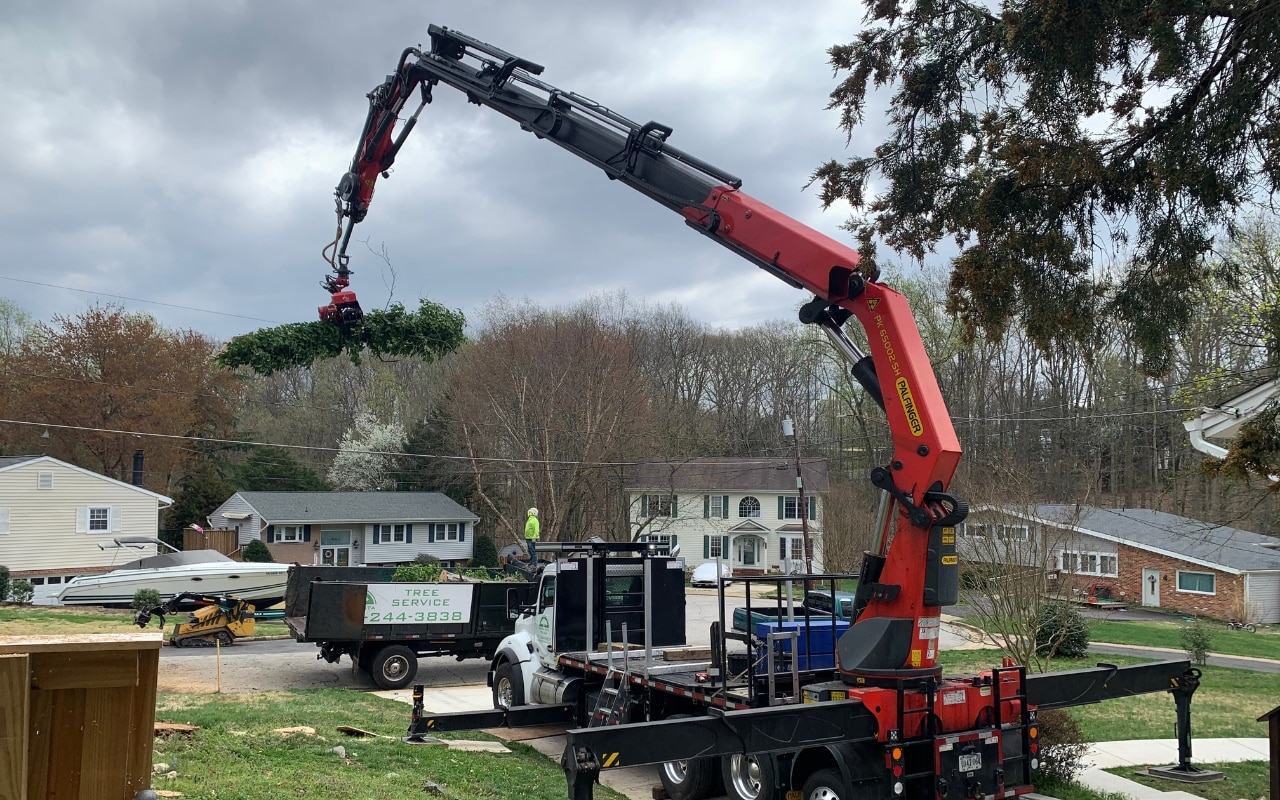
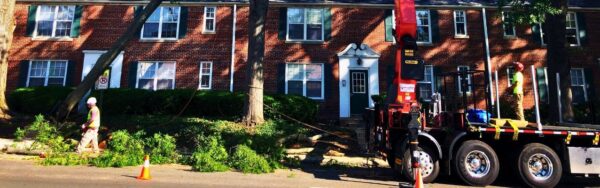
Heavy equipment like our robotic tree removal crane makes removing dead and dangerous trees much safer and faster.
Don’t Wait for Winter Storm Damage, Call Green Vista Today!
Fall is the ideal time to identify and address tree hazards before winter storms test your trees’ limits. Proactive tree care and storm preparation help Northern Virginia homeowners protect their property investments and keep their families safe through professional assessment and expert recommendations.
Ready to schedule your complimentary fall tree assessment? Call Green Vista Tree Care at 703-249-6219 or request a free quote online. Our ISA Certified Arborists will evaluate your trees, identify potential hazards, and provide clear recommendations to keep your family and property safe through winter storm season.

Get helpful tips, local news, inspiring stories, and more delivered right to your inbox every month. Don't miss another issue - join today!