Arlington’s mature tree canopy, frequent summer storms, and densely developed neighborhoods mean storm damage often occurs close to homes, vehicles, roads, and utility lines. Knowing how to evaluate the situation—and who to call first—can help you protect your property while avoiding unnecessary emergency service fees.
Key Takeaways
- Some tree situations require a call right now, regardless of the hour—others can safely wait until morning or a normal business day.
- The most important factor is whether the tree has a “target” below it: a structure, vehicle, road, or utility line.
- Never cut a limb under tension or enter a structure where a tree has penetrated the roof.
- When in doubt, most 24/7 tree services will walk you through a phone assessment at no charge.
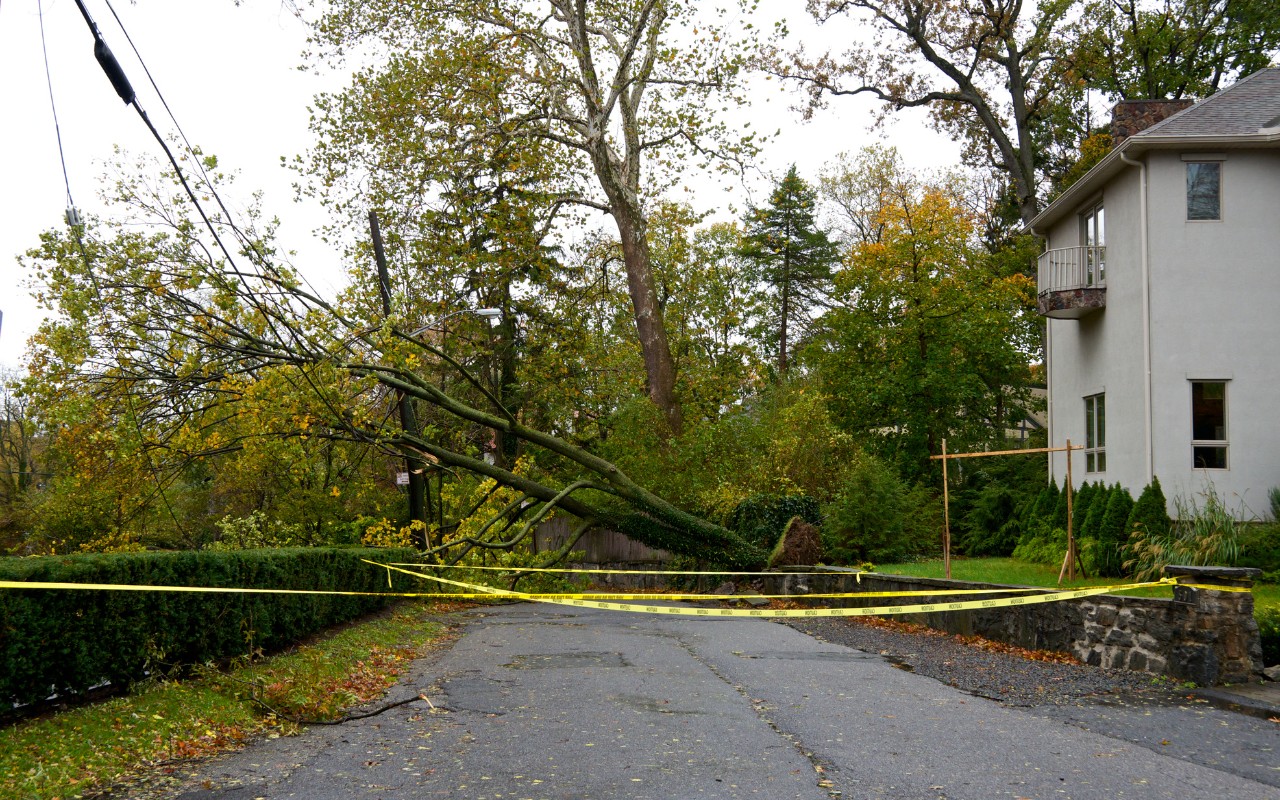
When a tree is tangled in power lines, your utility company is the first call—treat any downed or sagging line as live, even if your power is out.
How Urgent Is Your Tree Situation?
How urgent your situation is depends on what is sitting underneath the tree, sometimes referred to as “targets,” and how hard the tree is working to reach it. Targets are anything the tree could fall on or has already fallen on, such as:
- House
- Garage
- Vehicle
- Driveway
- Utility line
- Public road
In a place as densely built as Arlington, nearly every tree has a target somewhere in its fall radius. When those mature trees are in full leaf, the canopy acts as a sail and greatly increases the wind load a storm puts on the trunk and roots. So, a tree that looked steady yesterday can come down in a single strong gust.
Immediate Action Required
These are true emergencies, like a tree actively falling with something valuable directly in its path. It won’t settle by itself, and waiting only gives wind and gravity extra time to finish the job. Immediately call a 24/7 tree service, regardless of the hour:
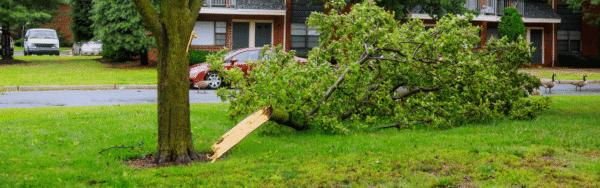
- A tree or large limb has fallen on a structure—house, garage, fence, or vehicle
- The tree is in contact with or has brought down a power line
- The root ball is visibly lifting from the ground (you can see soil heaving or roots pulling up)
- The trunk or a major branch is actively cracking—audible sounds are a serious warning sign
- The tree is blocking a driveway or road and preventing emergency vehicle access
- The tree was struck by lightning (structural integrity is unknown; fire risk is possible)
- Large dead limbs are hanging directly over the house after a wind event, held up only by surrounding branches
Urgent, But Not Immediate
These are the situations that don’t need a middle-of-the-night call but shouldn’t be put off for days. They present a real, yet not immediate risk, which means the tree is compromised but nothing is actively coming down on a target. Contact a tree service first thing in the morning if:
- The tree is leaning noticeably after the storm, but not toward a structure or utility line
- Hanging limbs from storm damage aren’t in contact with the structure or power lines
- A dead tree in your yard hasn’t been previously assessed, and storm season has elevated its failure risk
- Visible trunk decay, cavities, or fungal growth at the base was newly exposed or worsened by the storm
- A codominant stem—a V-shaped fork where two trunks share the same base—is showing fresh splitting after the storm
- A tree within striking distance of your home has lost a large, asymmetric portion of its crown, shifting weight distribution
Wait for Normal Scheduling
It’s important to note that not every downed branch is a crisis. The defining factor of this kind of situation is the absence of a target, which means if the tree or limb falls again, it won’t threaten anything of value. That means it’s a routine cleanup, not a safety emergency. These situations can wait for a regular appointment:
- A tree fell in the yard, away from structures, utilities, and access points
- Small or mid-sized limbs came down with no structural threat present
- A dead tree has no targets below or nearby
- A tree “looks unhealthy” but shows no acute failure signs
- Cosmetic damage—bark scraping, a minor lean that’s been there for years—with no change after the storm
For a professional assessment of Arlington trees that fall in the gray zone between emergency and routine work, Green Vista’s Arlington tree service includes risk evaluations along with standard tree care.
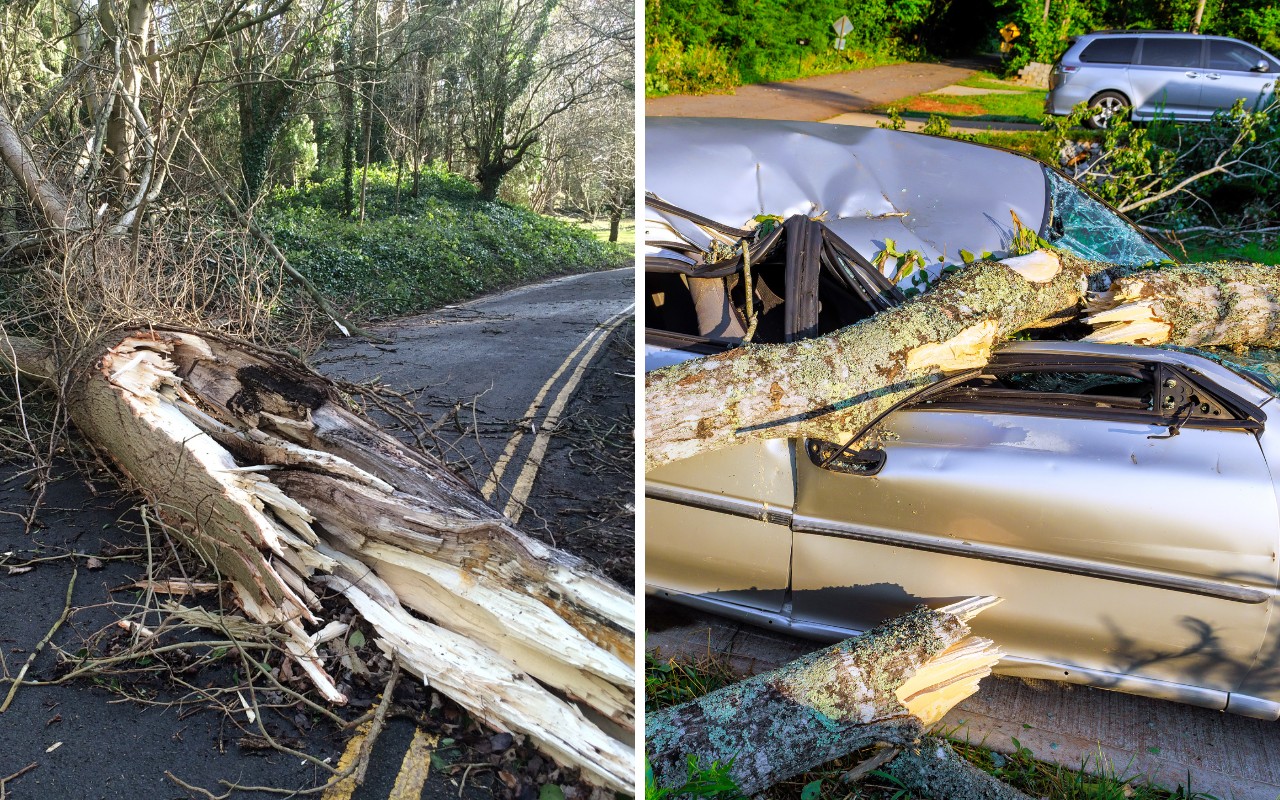
A “target” is whatever the tree lands on—a road, a car, a roof. When no one’s trapped, photograph the damage for insurance before anything gets moved.
Who Do You Call First During a Tree Emergency?
The next step depends on what’s happening, because reaching the wrong one first wastes time when time is of the essence. A smart move for each situation can look like:
- Tree on or near a power line: Your utility company first — only they can safely work on energized lines.
- Tree on the house with fire risk: 911 first, then a tree service.
- Tree blocking a public road: 911’s non-emergency line or Arlington County public works first, then a tree service.
- Tree on a vehicle, no one trapped: A tree service — and photograph the damage for insurance first.
- Tree in the yard with no immediate target: A tree service for an assessment.
- A neighbor’s tree on your property: A tree service to document and remove it; give your neighbor a heads-up.
What Not to Do After a Storm-Related Tree Emergency
In even the best conditions, emergency tree work is very dangerous. After a severe storm, the risks multiply. The following are mistakes that commonly make a bad situation worse:
- Don’t assume a downed power line is dead. Always treat it as energized; stay at least 35 feet away and call your utility company.
- Don’t enter a structure where a tree has penetrated the roof. Collapse risk is real and not always visible from the outside—leave that assessment to a structural professional.
- Don’t cut a limb under tension without professional training. Spring poles—branches or trunks that are bent under load—can release violently when cut. This is one of the leading causes of serious injury in DIY storm cleanup, and the physics can catch even experienced people off guard.
- Don’t go outside during an active storm to assess the damage. Wait until wind and lightning have passed. The tree will still be there when conditions are safe.
- Don’t wait several days on a call-now or call-by-morning situation hoping it holds. Storm-weakened trees can fail again in the next wind event—and June through August in Northern Virginia means there’s likely another storm coming.
The equipment and training required to do tree work after a storm aren’t things you can improvise on a weekend morning. If you’ve got a situation where something needs to come down, emergency tree removal is the right call.
Frequently Asked Questions About Emergency Tree Removals
What counts as a tree emergency?
Any situation where a tree or limb has fallen on a structure, is in contact with power lines, is actively uprooting, or is blocking emergency access is an immediate emergency. Significant storm damage with large hanging limbs or a dead tree near a structure is urgent. The deciding factor is whether there’s a target below the tree and how actively it’s being threatened.
Should I call 911 or a tree service when a tree falls on my house?
If there’s any risk of fire, a gas leak, or structural collapse, call 911 first. Otherwise, call a 24/7 tree service directly. Emergency services can help secure the scene, but the actual tree removal requires a licensed tree care company.
Is a leaning tree an emergency?
It depends on what’s below it. A tree leaning toward a structure with a root ball beginning to lift is a call-now emergency. A tree with a noticeable lean away from any structures, with no signs of root failure, is urgent but not necessarily a middle-of-the-night call. The lean alone doesn’t determine urgency.
Does emergency tree removal cost more than standard tree removal?
Yes. Emergency tree removal typically costs more than a scheduled removal because crews are responding immediately, often after hours or during severe weather. The price reflects the urgency of the response, additional safety precautions, and the increased complexity of working around damaged trees, structures, or utility lines. If the situation isn’t an immediate safety hazard, waiting until normal business hours is usually the more cost-effective option.
Who is responsible if my neighbor’s tree falls on my property?
Tree ownership doesn’t automatically mean liability; negligence generally has to be demonstrated. Document the damage with photos, contact your homeowner’s insurance, and have a tree service handle the removal. Notify your neighbor for documentation purposes, but don’t wait on that conversation before addressing a safety hazard.
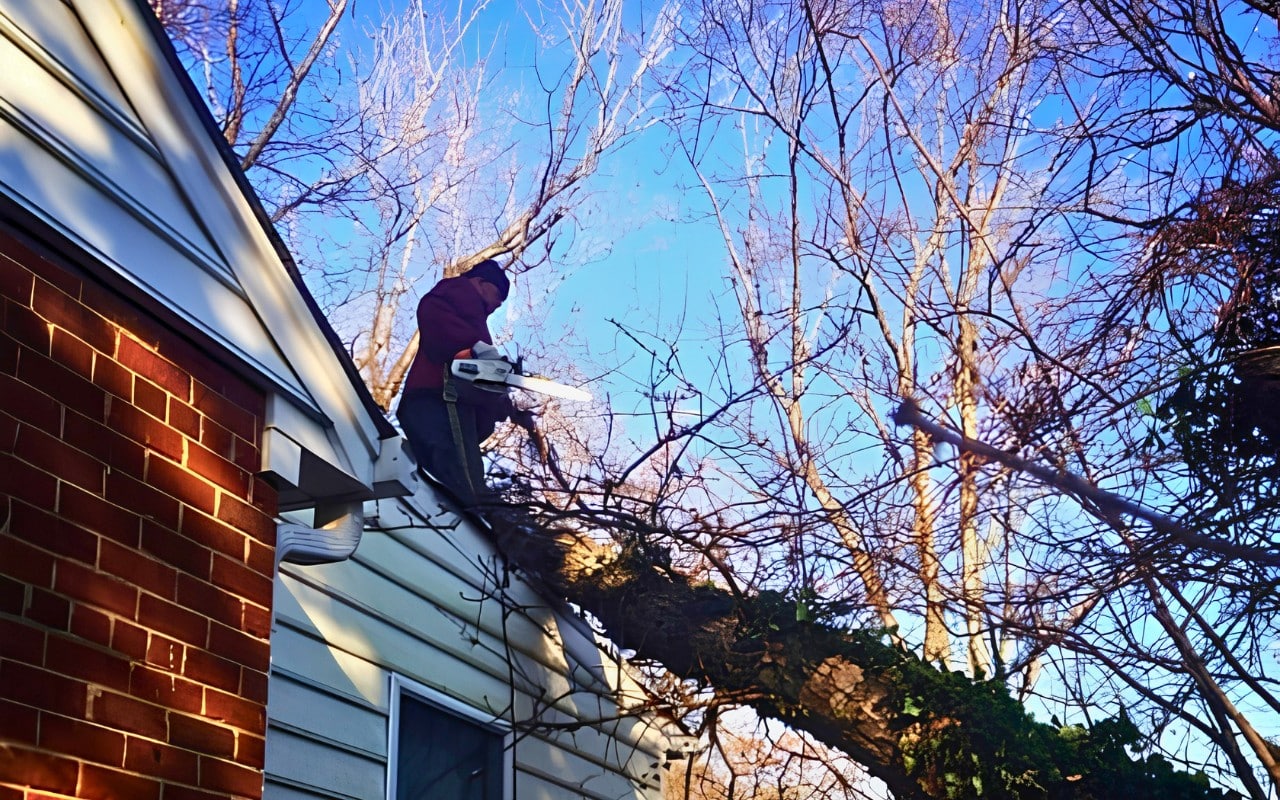
Clearing a tree off a structure safely takes professional equipment and training—it’s not a job to improvise with a ladder and a chainsaw.
Contact Green Vista for Your Emergency Tree Removals
Our storm damage cleanup guide can be a useful tool when trying to make the right choice. Green Vista is available 24/7 for emergencies throughout Arlington and Northern Virginia, and during peak storm season, non-emergency assessments are usually available within the same week. If you’re unsure where your situation falls, a quick call can help you figure it out.
Ready to get a pro’s eyes on your tree? Call Green Vista Tree Care today at 571-244-3838 and we’ll help you decide what to do next.


Get helpful tips, local news, inspiring stories, and more delivered right to your inbox every month. Don't miss another issue - join today!