The established neighborhoods of Northern Virginia were built around trees that were already mature by the time the houses started popping up. In Great Falls, McLean, Oakton, and the older parts of Arlington, Burke, and Alexandria, you’ll see oaks, tulip poplar, and hickory trees up to 90 feet and in close proximity to rooflines, driveways, and property lines.
When one of those trees needs to come down, its size is only part of the equation. Limited access, nearby homes and utilities, local permit requirements, and the condition of the tree can all affect how the removal is handled and what it costs. Understanding those factors can help you determine when removal is actually necessary, what you may need to do before work begins, and why tree removal costs vary so much from one Northern Virginia property to another.
Key Takeaways
- Tree removal is typically necessary when a tree is dead, beyond recovery, structurally unstable, or poses a risk that can’t be reasonably reduced another way.
- Most Northern Virginia homeowners don’t need a tree removal permit, but requirements can change based on the jurisdiction, property type, and whether the tree is in a protected area.
- Limited access, nearby structures, unstable wood, power lines, and a lack of a safe drop zone can make a removal more complex and determine the equipment and removal method required.
- Tree removal costs depend on the size of the tree and the labor, equipment, time, and disposal required to safely complete the job.
- Stump grinding is typically a separate service, and while it removes the visible stump below ground level, most of the tree’s root system remains underground to decay naturally.
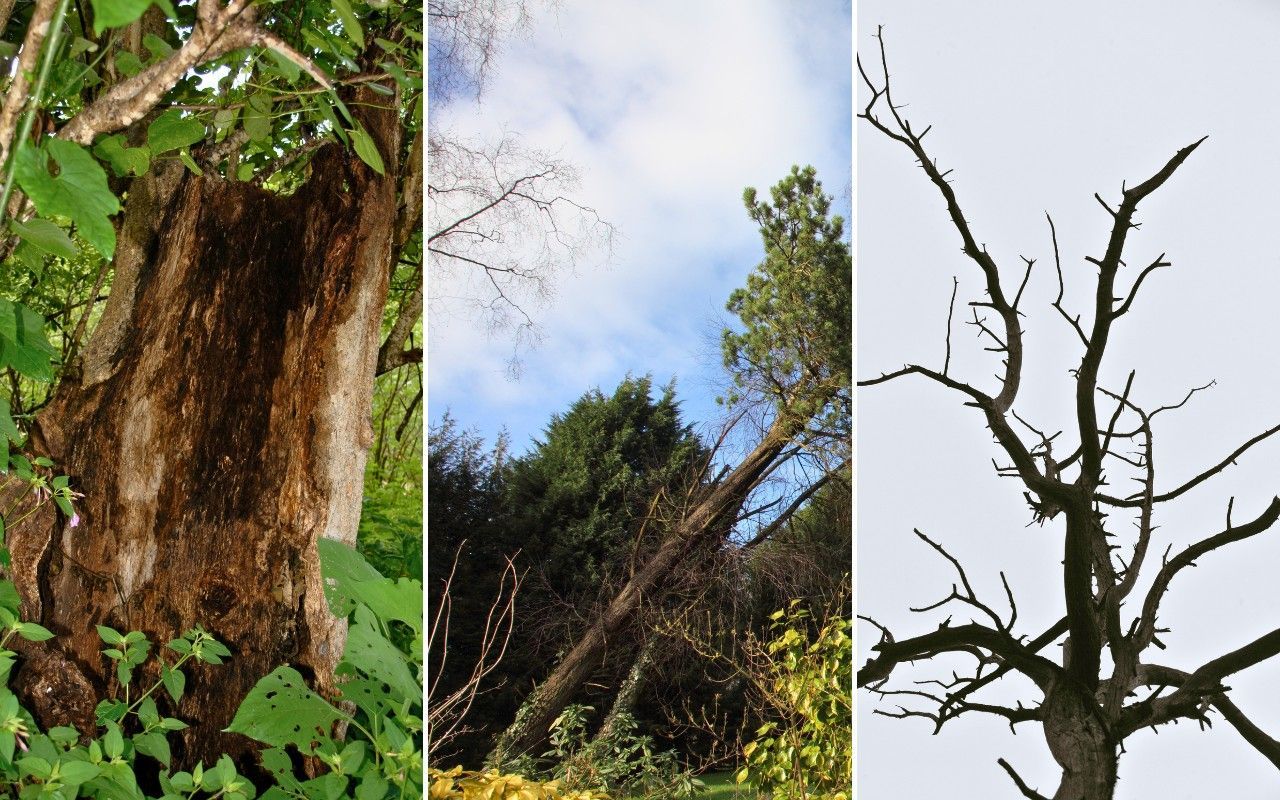
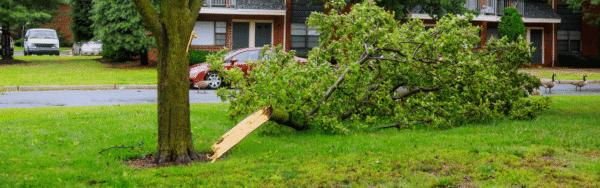
Trunk decay, a newly developed lean, and a canopy that fails to leaf out can all indicate a tree is declining or structurally unstable enough to require removal.
When Does a Tree Actually Need to Be Removed?
A tree needs to be removed when it is dead, too damaged or diseased to recover, structurally unstable, or poses a risk to people or property that can’t be adequately reduced through pruning or other corrective measures. Removal may also be necessary when the tree is interfering with construction or causing significant damage to a structure that can’t be resolved another way.
Signs a Tree May Need to Be Removed
Structural problems often make themselves known at the base and in the upper canopy. These are the conditions that typically mean a tree needs to be removed:
- Significant trunk decay, open cavities, or fungal fruiting bodies growing at the base of the trunk
- A lean that developed recently, especially when the soil is heaving or cracking at the root plate (the dense mass of anchoring roots and soil directly beneath the trunk)
- Extensive deadwood throughout the upper canopy, or a dead tree of any size
- Root damage from trenching, grading, or construction inside the critical root zone
Tree Problems That Can Often Be Addressed Without Removal
Most of the complaints we see are maintenance problems, not safety concerns. Rarely do these conditions justify taking a tree down:
- Isolated dead limbs on a tree that is otherwise sound
- Branches over a roof, driveway, or patio that can be reduced or cleared
- Surface roots, heavy leaf litter, and dense shade
- Seasonal fruit, seed, or nut drop
- A cavity in a tree that still has enough sound wood to remain structurally stable
None of these issues automatically means a tree should be removed. If the tree is healthy and structurally stable, the problem can often be managed without sacrificing decades of established canopy.
Do You Need a Permit to Remove a Tree in Northern Virginia?
Usually, no. Most Northern Virginia homeowners do not need a permit to remove a tree from their own residential property. However, permit requirements vary by jurisdiction and property conditions, and certain trees or lots may be subject to additional rules. In Fairfax County, for example, most residential tree removals don’t require a permit, while the City of Fairfax has its own requirements.
When Fairfax County Requires a Tree Removal Permit
Fairfax County may require a permit or approval when:
- Tree removal disturbs 2,500 square feet or more of land. Removing trees counts as land disturbance, and projects at or above this threshold require a land-disturbance permit and approved grading plan.
- The tree is within a Resource Protection Area (RPA). Vegetation generally cannot be removed from an RPA without prior county approval, including dead, dying, or diseased trees.
- The tree is within a conservation easement. Tree removal must comply with the restrictions recorded for that easement and may require a county waiver.
- The tree is on a non-residential property. Trees required for screening, parking lot landscaping, or other zoning requirements may be protected from removal.
RPAs are particularly important for properties near streams and other waterways. These protected areas can extend onto private residential lots, and the boundary may not match a fence line or another visible feature. Fairfax County provides an online RPA map homeowners can use to see whether their property may be affected.
When City of Fairfax Requires a Tree Removal Permit
The City of Fairfax has different tree removal requirements than Fairfax County. In the city, a permit is generally required to remove a tree more than five inches in diameter, measured 4.5 feet above the ground, when:
- The tree is within a Resource Protection Area (RPA).
- The property is zoned RL, RM, or RH and is larger than half an acre.
- The property is within another zoning district, including townhouse and planned development districts.
For RL, RM, and RH properties that are half an acre or smaller, a tree removal permit generally isn’t required unless the tree is within an RPA. The city also has a separate process for trees posing an imminent threat to people or property.
Homeowners who need approval can apply through the City of Fairfax tree removal permit process.
What Virginia Law Says About Removing a Neighbor’s Tree
What you can do about a neighbor’s tree depends on whether it’s simply crossing your property line or actually causing damage:
- Branches or Roots Cross onto Your Property: You can generally trim them back to the property line at your own expense.
- The Tree Drops Leaves, Fruit, or Other Debris: These inconveniences generally aren’t enough to require your neighbor to remove the tree.
- The Tree Is Causing Actual Damage: Under Fancher v. Fagella, 274 Va. 549 (2007), an encroaching tree may be considered a nuisance when it causes actual harm to a neighboring property.
- The Tree Poses an Imminent Danger: Virginia law also allows action when an encroaching tree creates an imminent danger of actual harm. A court may order the problem addressed and, in some cases, order removal.
- A Healthy Tree Falls During a Storm: Each property owner is generally responsible for damage on their own property. Virginia’s fallen-tree liability standard explains how liability works after storm damage.
- A Hazardous Tree Falls: The owner may be liable if they knew or reasonably should have known the tree was dangerous and failed to address it.
If you’re concerned about a neighbor’s tree, put your concerns in writing before something happens. That creates a record that the owner was made aware of the potential hazard.
For more detail about branches or roots crossing your property line, see our blog on your legal rights regarding overhanging trees.
DISCLAIMER : This is general information, not legal advice. For an active dispute with a neighbor, consult an attorney licensed in Virginia.
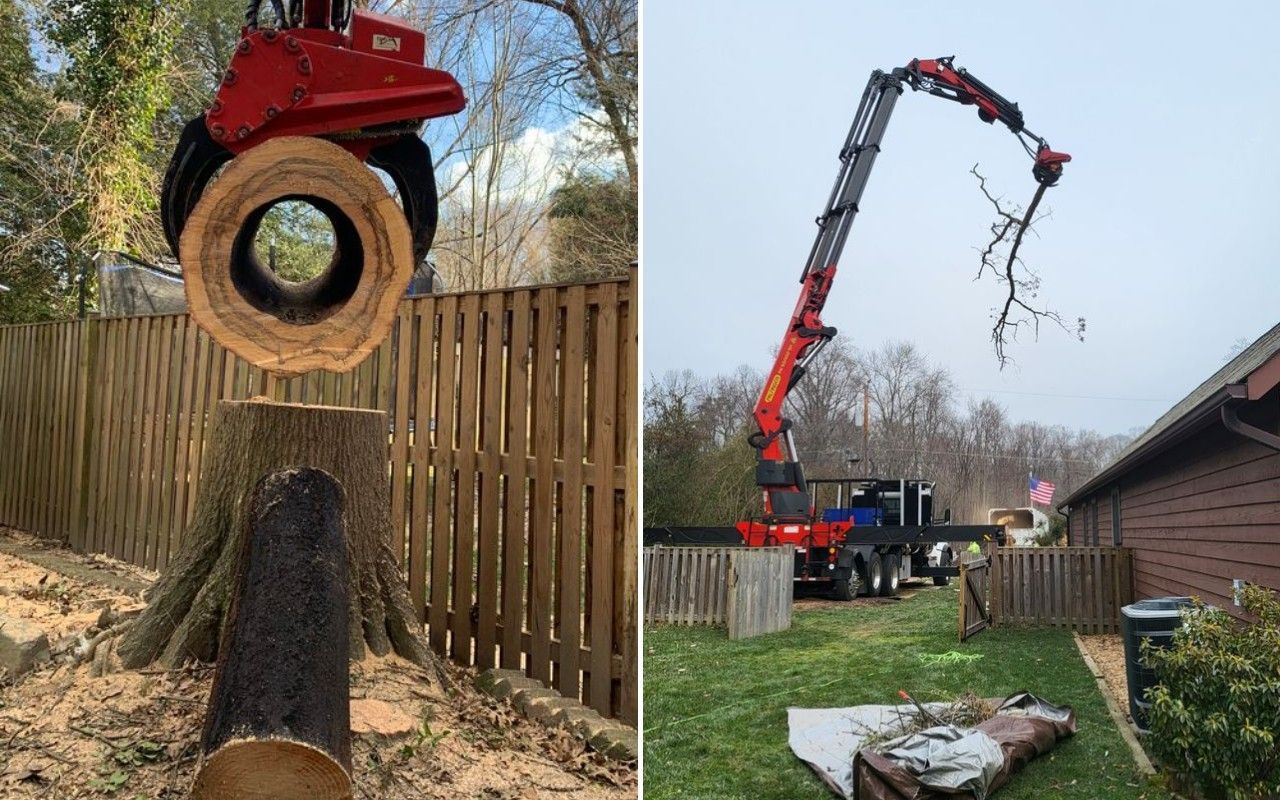
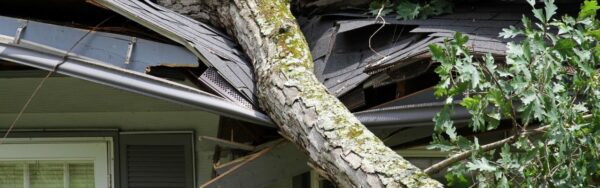
Extensive trunk decay can make a tree unsafe to climb, requiring crews to use a crane or another controlled removal method instead.
What Makes a Tree Removal Complex?
The complexity lies in what surrounds the tree as well as the condition it’s in. A 90-foot poplar in an open field is a straightforward job, while that same tree 20 feet from the corner of a house, with a fence on one side and a slope on the other, is a completely different one.
Property and Tree Conditions That Make Removal More Difficult
Several conditions can make a tree more difficult, time-consuming, or hazardous to remove:
- No Drop Zone : Felling requires a clear landing area and sufficient clearance for the tree’s height, lean, crown spread, and expected fall path – conditions rarely available on Northern Virginia residential lots.
- Proximity to Structures : A house, pool, shed, fence, or driveway inside the reach radius rules out felling a tree entirely and forces a section by section approach.
- Lean and Load : A tree already leaning toward a target, or one holding storm-loaded limbs, behaves unpredictably once cutting starts.
- Equipment Access : Gate width, slope, soft ground, and overhead obstructions decide whether a crane or compact equipment can reach the tree at all.
- Dead Wood : Dead trees are more dangerous to remove than live ones because the wood is brittle, unpredictable under load, and offers no reliable holding strength.
- Overhead Lines : A minimum approach distance applies around energized lines, commonly 10 feet for unqualified workers on lines up to 50 kV, with greater distances required for higher voltages. Utilities or qualified line-clearance crews handle work near energized lines.
When Conditions Make a Removal an Emergency
Loaded limbs, a compromised trunk, or a partially failed root plate all mean the tree can move on its own before anyone touches it, which changes how the crew approaches the work. That’s why emergency tree service is handled differently. If you’re trying to judge whether your situation qualifies, our guide to when a tree situation is an emergency walks through the conditions that warrant a same-day call.
How Do Professionals Remove a Large Tree?
A large tree standing close to a structure is dismantled in controlled sections from the top down. The crew uses rigging and controlled lowering to keep pieces away from structures and other targets.
The Standard Removal Sequence
Most residential removals follow the same sequence:
- On-Site Assessment : A tree care professional evaluates the tree’s condition, identifies what’s within its reach, and confirms how equipment can get to it.
- Written Estimate and Scheduling : We document the plan, the method, and the price before anyone commits to a date.
- Utility Locate :Underground utilities are located before work that could disturb or contact them, including stump grinding where applicable.
- Sectional Dismantling or Crane-Assisted Removal : The crew takes the tree down in pieces, either lowering them by rigging or lifting them out by crane.
- Chipping and Hauling : The crew chips brush on site, then cuts and removes the wood.
- Stump Grinding, When It’s Been Added : This follows once the tree is down and the site is clear.
- Final Cleanup and Walkthrough: The crew rakes the work area and reviews the finished job with you.
How the Removal Method Is Chosen
The safest removal method depends on the tree’s size and condition, the space around it, equipment access, and nearby structures or utilities. Depending on those conditions, a crew may use:
- Sectional Removal: A climber removes the tree in smaller sections, lowering limbs and trunk pieces when there isn’t enough room to fell the tree whole. This works when the tree is structurally sound enough to climb.
- Crane-Assisted Removal: A crane supports sections of the tree as they’re cut, allowing crews to control large or heavy pieces around homes and other obstacles. Cranes may also be used when the tree’s condition makes climbing unsafe. Learn more about why some removals use cranes.
- Compact Equipment: Smaller equipment can access trees in confined spaces where a full-size crane or truck can’t reach.
For large trees close to a home, crews may combine these methods to keep branches and trunk sections controlled throughout the removal. Our guide to how a large tree near a house is removed safely explains that process in more detail.
What Determines the Cost of Tree Removal?
Tree removal is priced based on the labor, equipment, and disposal required to complete the job safely. A removal that takes a small crew a few hours will cost less than one that requires a full day, specialized equipment, and multiple loads of wood and debris.
The biggest cost factors include:
- Tree Size: Larger trunk diameters and taller trees mean more material to cut, control, process, and haul away.
- Removal Method: Felling a tree whole is generally faster and less labor-intensive than dismantling it in sections or using a crane.
- Crew and Equipment: Climbers, cranes, compact equipment, additional crew members, and specialized rigging increase the resources needed for the job.
- Time on Site: Difficult access or a tree that requires extensive rigging can turn a few-hour removal into a full-day project.
- Wood and Debris: Larger trees produce more material to chip, haul, and dispose of or recycle.
- Stump Grinding: Grinding the stump adds another step and is typically priced separately from removing the tree.
Because every property and tree is different, there isn’t one standard price for tree removal. See what tree removal costs in Northern Virginia for typical price ranges and a closer look at how these factors affect your estimate.
What Happens After a Tree Is Removed?
Taking the tree down is only part of the job. Before the crew leaves, the site needs to be cleaned up and any remaining work handled based on how you plan to use the area afterward.
What Happens to the Stump?
The stump remains unless you choose to have it ground. Stump grinding removes the visible stump and grinds it several inches below ground level, making it possible to cover the area with topsoil and grass or prepare it for another use.
Grinding does not remove the tree’s entire root system. Most underground roots remain in place and decay naturally over time, which can eventually cause some settling in the soil. Some species may also produce new shoots from the remaining roots for a period after removal.
What Happens to the Tree Debris?
Branches are typically chipped, while larger pieces of the trunk are hauled away for recycling or other uses. The amount of debris depends on the size of the tree, and cleanup and hauling are handled as part of the removal.
For a closer look at where the material goes after it leaves your property, see what happens to the wood after a tree removal.
Frequently Asked Questions About Tree Removal in Northern Virginia
How long does it take to remove a tree?
Crane-assisted work can substantially reduce removal time on some complex trees. Site access and cleanup scope affect the timeline more than the tree’s height does.
Do I need to be home during a tree removal?
You don’t need to be present once the work is scheduled and the plan is set. Many homeowners prefer to be there for the final walkthrough.
Do I need to move anything before the crew arrives?
Move vehicles, patio furniture, and anything fragile clear of the access route and the work area. Point out septic lids, sprinkler heads, and irrigation lines so the crew can plan around them.
What is the best time of year to remove a tree?
Late fall through winter is often the best time to remove a tree because deciduous trees have dropped their leaves, making the tree’s structure easier to see and giving crews better access to the canopy. However, if a tree is dead, unstable, or poses a safety risk, the best time to remove it is as soon as possible rather than waiting for a particular season.
Can I plant a new tree where the old stump was ground?
Yes, but it’s usually better to plant the new tree a few feet away from the old stump. The remaining roots and wood chips can make it difficult to dig a proper planting hole and may affect how well the new tree establishes.
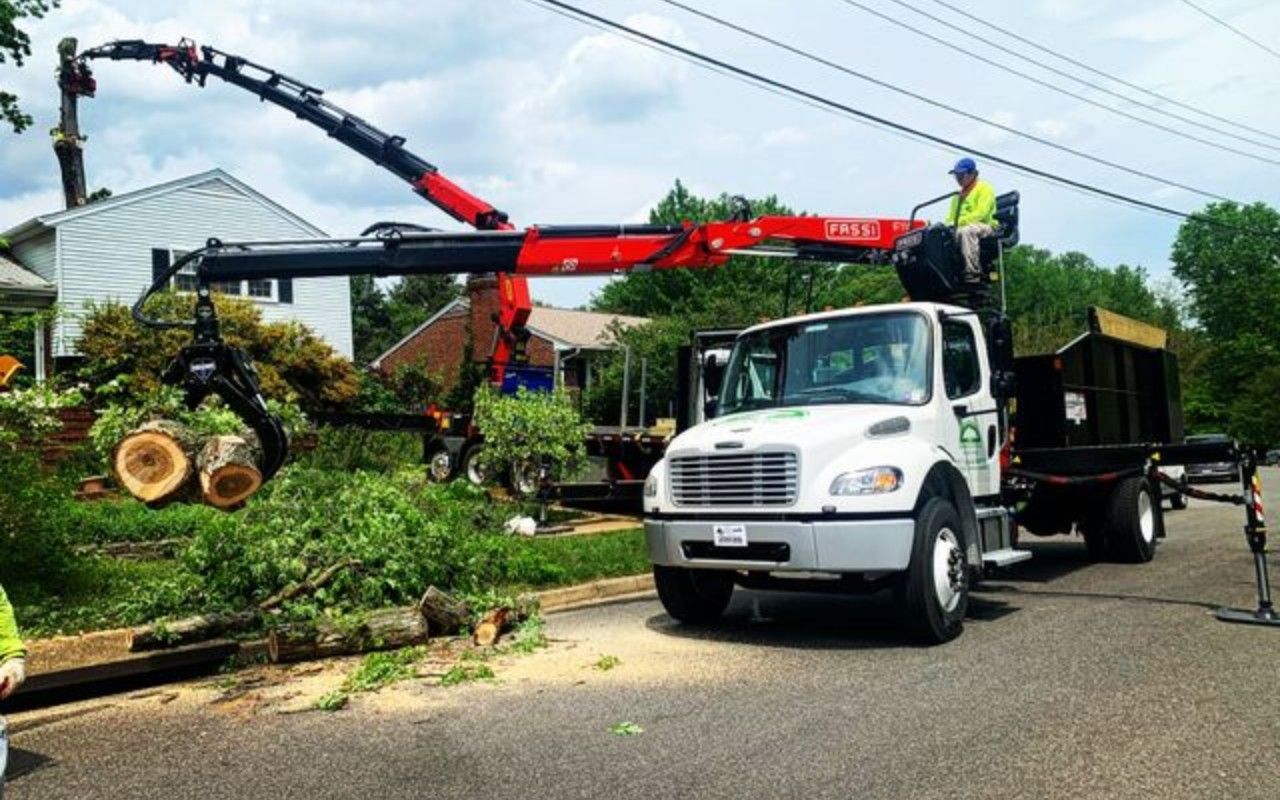
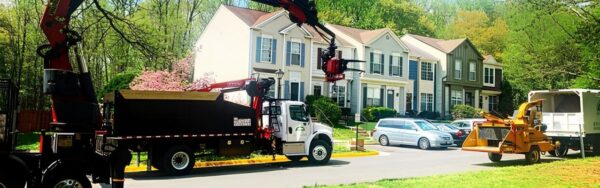
The crane lifts each section clear of the yard, so nothing has to be dragged across the property.
Schedule Tree Removal with Green Vista Tree Care Today
Tree removal in Northern Virginia isn’t one-size-fits-all. Whether a tree needs to come down, whether a permit is required, how it can be safely removed, and what the job will cost all depend on the tree’s condition and the property around it.
If you have a dead, hazardous, or unwanted tree on your Northern Virginia property, Green Vista Tree Care can determine the safest way to remove it based on its size, condition, location, and access. Request a free estimate for your tree removal and get a clear plan for what it will take to get the tree down safely.


Get helpful tips, local news, inspiring stories, and more delivered right to your inbox every month. Don't miss another issue - join today!