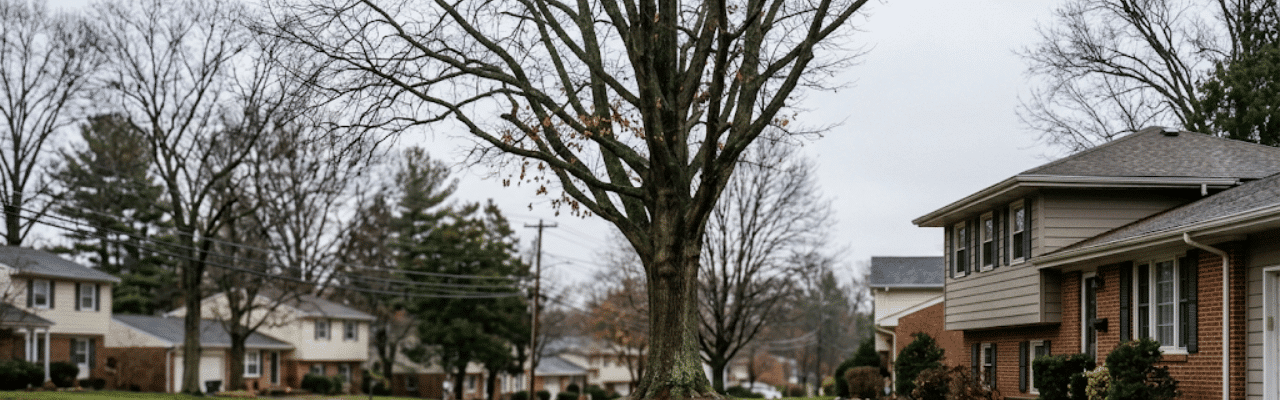
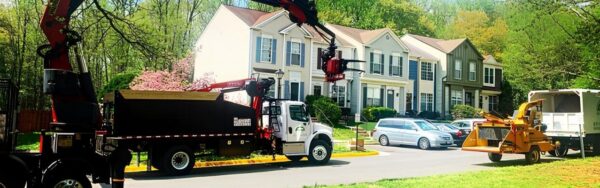
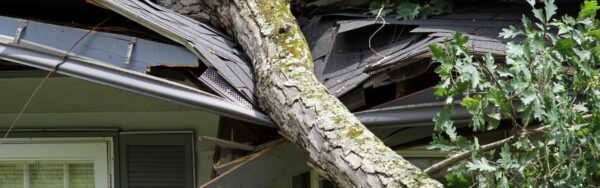
During a recent storm, a large tree fell on Friar Tuck Court in Annandale and crushed at least three vehicles. A lean, crack, or dead branch on a mature white oak, red maple, or sweetgum can bring down a limb or the entire tree. If you notice something that looks off on one of your trees, you might be asking: Should I remove a tree before winter? The answer depends on the type of defect and what’s beneath the tree.
Key Takeaways
- Bare branches did not make your tree worse; they exposed dead wood, cracks, branch unions, and lean that summer leaves were covering.
- A defect only becomes a hazard when a house, driveway, play area, or parked car is within striking distance of it.
- Dead or cracked wood, or a recent uncorrected lean, over a house or driveway is an act-now situation, not a wait-for-spring one.
- A tree that has looked the same for years can still have hidden decay, because decay can sit inside the trunk where you cannot see it.
- Check for a conservation easement, a Resource Protection Area, and HOA covenants before any removal.
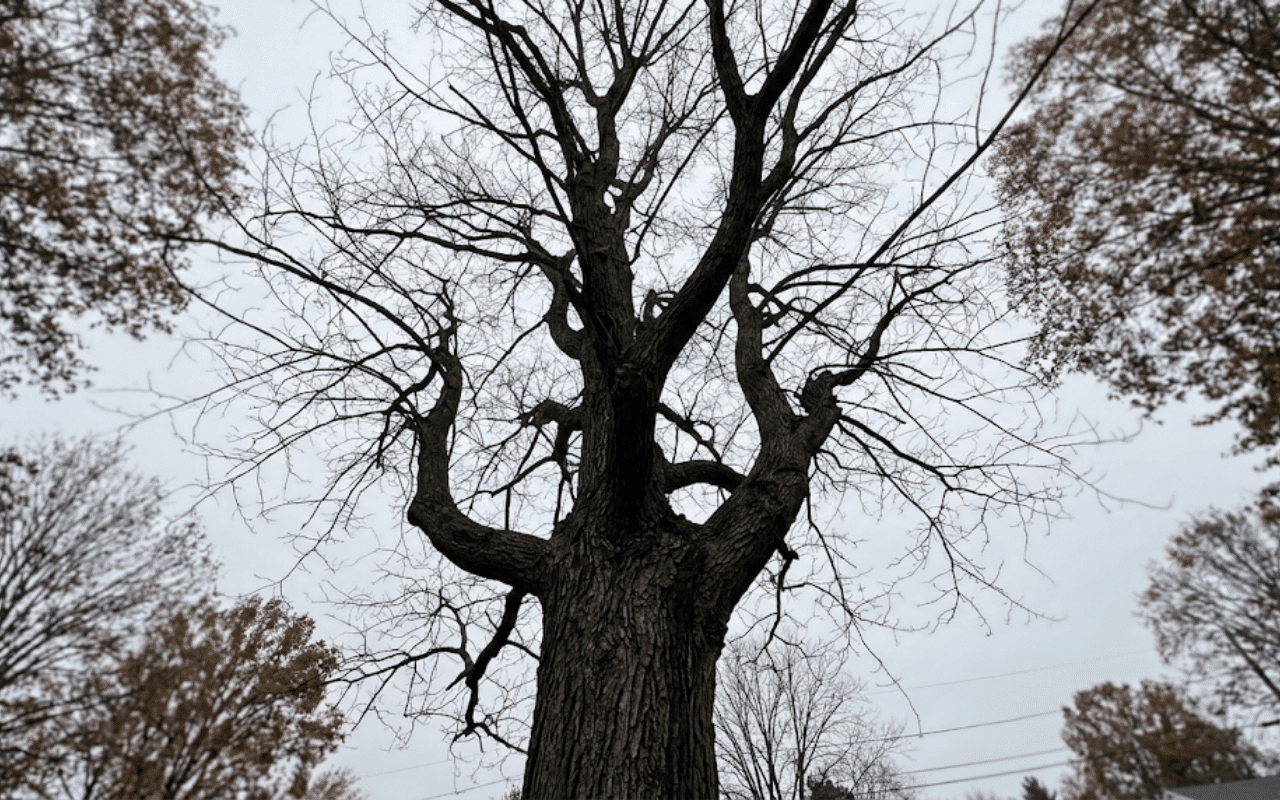
Bare branches make cracks, dead wood, and lean easier to spot before the next storm.
Why Does My Tree Look Worse Without Its Leaves?
Your tree looks worse because you’re finally seeing what the leaves have been hiding. When the branches are bare, it’s easier to look at things like:
- The trunk and bark, where cracks and splits show up
- The spots where limbs attach to the trunk
- The base of the tree and the soil around it
- The overall tilt of the tree compared with its neighbors
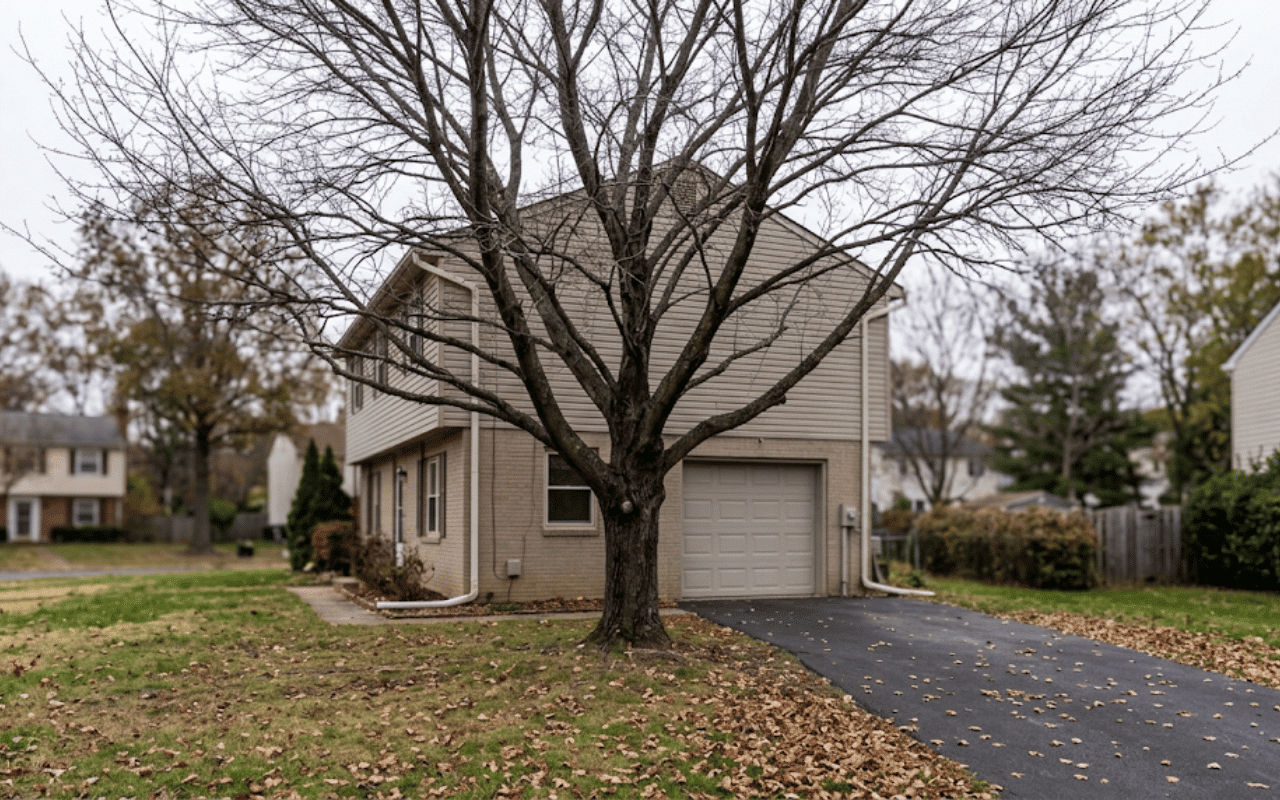
A defect matters most when a house, driveway, or play area sits within striking distance of the tree.
What Kind of Tree Problems Should Be Taken Seriously?
Leans, cracks, dead wood, and cavities are some tree problems that should be taken seriously, since each indicates that a part of the tree may fail. Look for these signs as you’re walking your yard:
- Lean : A recent lean that has not been corrected is a warning sign, especially when heaving soil, gaps, or fissures at the base show the tree has lost its anchorage. Direction by itself doesn’t tell you much, though. Our post on uprooted trees covers trees that lose their hold.
- Crack : A split in the trunk or a large branch, which signals weakened structure.
- Dead Wood : A dead branch large enough to cause injury if it falls. What counts as large varies with the branch’s size and height. Hanging or broken branches after a storm count here too. Our post on dead trees goes deeper.
- Cavity : A sign of decay, which is usually best evaluated by a trained tree care professional.
Potential targets (e.g., a house, parked car, or play area) beneath a tree with such defects determine how serious a failure could be. A cracked limb over the back fence is a different story from the same limb hanging over your roof. For a more in-depth look at assessing a tree in the fall, our post on fall tree risk assessment is a helpful resource.
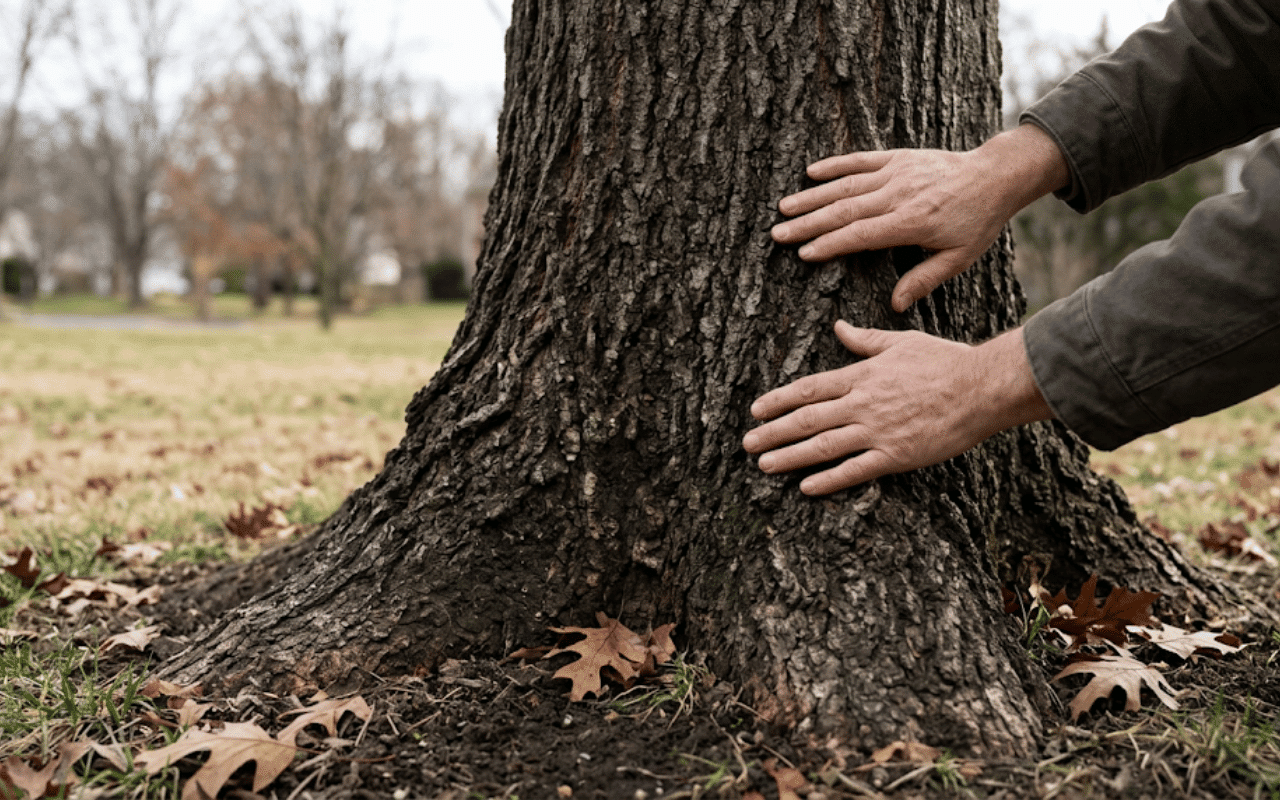
A tree that has looked the same for years can still hide decay, so an assessment is the only way to know.
Should I Remove a Tree Before Winter or Wait Until Spring?
If a tree’s dead, has cracked wood, or developed a recent lean near a house or other target, remove it now. If you can’t judge the problem from the ground, you should get it assessed by a professional first. Regardless of the level of urgency, the defect and target matter more than a calendar date:
- Act Now : Dead or cracked wood, a recent lean, or storm damage such as hanging branches over a house, driveway, or play area. Large dead wood over a target must be removed immediately. Our post on how to know when it’s time to remove a tree can help you confirm the call, and our stump grinding FAQs cover the next step.
- Get an Assessment First : Crown dieback, a cavity or suspected decay, or a lean you cannot tell is new.
A stressed tree with no target in range is lower urgency because a defect isn’t a hazard without something beneath it. Lower urgency does not mean the tree is safe.
What About a Tree That Has Looked Like This for Years?
A tree that’s looked like this for years can be stable, but the only way to tell a long-standing condition from one that’s changing is an assessment. If a tree goes unassessed, it could be carrying problems that also go unmeasured. Two things can hide in a tree that has looked the same every year:
- Hidden Decay : Decay can sit inside the trunk, so the interior can change while the outside looks the same.
- Oak Decline : The earliest visible symptom is crown dieback that progresses from the top down and the outside in. It has no single cause, and a declining oak may die after a few years or even decades.
Frequently Asked Questions About Hazard Trees
Does a mushroom growing on my tree mean it has to come down?
Not automatically. Mushrooms at the base, or conks on the trunk or branches, can signal decay, but decay alone does not make a tree highly defective. What matters is how much sound wood remains, which a trained tree care professional can measure.
What does a tree risk assessment involve?
A tree risk assessment is a trained professional’s inspection of a tree and the site it grows on. It comes in three levels: Level 1 is a limited visual check, Level 2 is a basic inspection of the tree and its site, and Level 3 is an advanced assessment with specialized tools. A homeowner with a specific concern typically starts with a Level 2, and a Level 3 is added when specialized tools are needed to answer remaining questions.
Do I need a permit to remove a tree in Fairfax County?
Usually not, since Virginia has no laws or regulations prohibiting you from removing individual trees on your own property. Exceptions include a conservation easement or Resource Protection Area, where dead, diseased, or dying trees can generally be removed by hand, and HOA or zoning rules such as transitional screening. Annandale, Burke, and Fairfax Station fall under county rules, but cities and towns inside the county, such as the City of Fairfax, can have their own, so check with your local government first.
What should I do if a tree is on power lines or blocking a road?
Call 9-1-1 if a tree on electric wires or blocking a public road is an immediate life-threatening hazard, and stay away from any tree on lines. Then contact your utility.
- Dominion: 1-866-366-4357
- NOVEC: 703-335-0500
Once the area is safe, an emergency tree service can handle the removal.
Contact Green Vista Tree Care Before Winter
It’s easier to spot defects when branches are bare. Before the next storm, walk your property and take photos of any tree with a defect. Then request a free estimate, send us those photos, and we’ll take care of the trees that matter most.

Get helpful tips, local news, inspiring stories, and more delivered right to your inbox every month. Don't miss another issue - join today!